
Almonds – Make your Heart Happy and Lose Weight

Published on 07/21/2009 - 6 comments!

Word Count: 574 NF Difficulty: Beginner
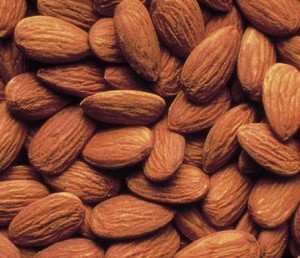
almondsLooking for a quick and easy snack that doesn’t require any preparation and is extremely good for you?  Almonds, my friend. Almonds!  Today’s post is short and sweet because I don’t think 1000 words on almonds would appeal to anybody….and I don’t really need 1000 words to explain them.

Let’s talk about why Almonds are so great for you:

  • High in Monounsaturated fats - Look at the nutrition label on a bag of almonds – high in fat, but extremely low in saturated fat (the bad kind).  What’s left?  Monounsaturated fat has been linked in multiple studies to a reduced risk of heart disease.  Heart disease is a real bummer, so any time you can eat something and reduce your risk of getting it, do it.
  • Lower cholesterol – When you substitute almonds in place of the bad fats (saturated and trans fat) in your diet, you can decrease your LDL-cholesterol (the BAD kind of cholesterol) as well.  Lower cholesterol and decreased risk of heart disease?  Flippin’ sweet.
  • High in Magnesium and Potassium - Magnesium is almost like Drain-o for your arteries and veins, keeping them clean so blood, oxygen, and nutrients can move throughout your body without a problem.  Potassium helps maintain normal blood pressure.  Woot.
  • High in Protein, low in carbs - You know how important protein is to building muscle – 1/4th cup of Almonds has almost 8 grams of protein in it.  Not bad for something that’s ridiculously cheap at the moment and couldn’t be easier to prepare (step 1: open bag. step 2: eat)
  • Tasty – Seriously! Grab a handful and go to town.  Yum.
  • Curb your appetite – Studies have shown that people who eat almonds in moderation have experienced a decreased appetite, which is obviously great for losing weight.
  • Healthier Skin? Some say that almonds can also improve your skin quality!  I’m not sure on this one, but not a bad side effect to have if it’s true…better than “may cause your arms to fall off.”  That would suck.
  • Dozens of other health benefits – there are way more great thing about almonds that I won’t get into; if you haven’t realized they’re good for you by now, it’s a lost cause.

One thing to keep track of: almonds are high in calories, so if you’re on a low calorie diet, don’t start eating two full bags a day.  Instead, take a look at your diet and see if an extra 200 calories (1 serving) can be spread throughout your day.  Remember, if you are eating too little, your body goes into starvation mode and your diet can actually backfire (read why here).  One of my friends is losing weight at the moment and is struggling to eat enough healthy calories every day.  Because he doesn’t want his body to go into starvation mode, he’s added a serving of almonds to his diet.

If you have a Kroger or Ralph’s Supermarket in your area, big bags of almonds are on sale for like $3.99.  Just make sure you buy the natural ones without extra stuff added (like sugar).  Try Almond butter (instead of peanut butter) or almond milk if you’re looking to mix things up.  Raw almonds too boring?  Try the dry roasted, unsalted kind (this goes for peanuts too).  As long as they were roasted in oil and covered in unhealthy stuff, you’re good to go.

Take the bowl of Skittles off your desk and replace it with a bag of almonds. You can thank me later.

-Steve

3 missions to Awesome

If you enjoyed this article, sign up below for the free "3 Missions to Awesome" email series along with free weekly articles:

  • http://www.eatsmartagesmart.com/ Eat Smart Age Smart

    Almonds are a great source of Vitamins B2 and E, magnesium, and zinc. Vitamin E has been shown to fight the free radicals that come from stress and, in particular, heart disease. Canadian researchers found that almonds significantly lowered bad cholesterol levels in a study of people with high cholesterol.

  • http://www.eatsmartagesmart.com Eat Smart Age Smart

    Almonds are a great source of Vitamins B2 and E, magnesium, and zinc. Vitamin E has been shown to fight the free radicals that come from stress and, in particular, heart disease. Canadian researchers found that almonds significantly lowered bad cholesterol levels in a study of people with high cholesterol.

  • Steve

    Thanks for the comment! It seems like every day there is a new study or report linking almonds to more awesomeness.

    Almonds for the win!

    -Steve

  • Steve

    Thanks for the comment! It seems like every day there is a new study or report linking almonds to more awesomeness.

    Almonds for the win!

    -Steve

  • http://www.healingcancernaturally.com/cayce-almonds-health-readings.html Ben Robinson

    Almonds in the Cayce Readings Compared to Current Medical Research
    pertinent extracts relating to the healing of cancer excerpted by Healing Cancer Naturally from article by Douglas G. Richards (© 2001 Meridian Institute)
    “Those who would eat two to three almonds each day need never fear cancer.” (1158-31)

    Mentions of almonds in the Cayce readings fall into several categories: (1) as general sources of nutrition, (2) as sources of fats (in low or no meat diets), (3) as cancer/tumor preventatives, (4) as a skin lotion/therapy, (5) as a spiritual symbol. The use of almonds as a source of fats was most commonly found in low or no meat diets recommended as a cancer preventative or part of a cancer cure.

    Nutritional Properties of Almonds
    Cayce makes occasional references to specific nutritional properties of almonds (e.g., 1861-10). In one reading he says, “The almond carries more phosphorus AND iron in a combination easily assimilated than any other nut.” (1131-2) Almonds were also suggested to a pregnant woman as a good substitute for milk as a source of calcium (480-46) and to a woman with lymph and uterine tumors as a source of calcium (1140-2). In reading 659-1, a general reading on the vitamin biotin, he identifies the almond as a good source of biotin, and remarks that it is useful as a cancer preventative. Cayce most commonly identifies almonds as a good source of fat/oil for people on a meatless diet, recommended for cancer (4438-1, 3515-1, 1012-1, 1000-11, 967-2, 787-1).

    Current research confirms the validity of all these statements. The primary research on almonds in the prevention of disease looks at them as a source of healthy fat (as opposed to highly saturated animal fats). Most has focused on heart disease and lowering of cholesterol rather than cancer.

    The nutritional information provided by the Almond Board (Fisher & Lachance, 2000; USDA, 2001) gives the following values for phosphorus, iron, calcium, magnesium, and vitamin E (biotin was not measured), for 1 ounce of nuts:

    Mg %DV
    Phosphorus 134.379 NA
    Iron 1.219 6
    Calcium 70.308 8
    Magnesium 77.963 21
    Vitamin E 7.422 35

    Fisher and Lachance (2000) also calculate the “nutrient density” of the major nutrients compared to the percent daily value (DV) for 100 grams. Almonds top the list of nuts at 37%, followed by cashews at 33%, and filberts (hazelnuts) at 32%. Walnuts and Brazil nuts are substantially lower in nutrient density (both at 27%). Pecans (24%) and macadamia nuts (15%) are at the bottom of the list. Note in the Cayce readings below, that filberts and cashews were often recommended as well as almonds.

    This makes almonds a good source of these vitamins and minerals, though there is nothing on the specific relationship of phosphorus and iron. Almonds are also a particularly good source of Vitamin E and magnesium.

    In addition, Fisher and Lachance (2000) discuss some other nutrients that may also contribute to the health benefits of almonds. These include dietary fiber, the mineral boron, and phytochemicals. A number of phytochemicals have been identified in almonds, including flavenoids and plant sterols. Phytochemicals have been associated with the prevention and/or treatment of cancer, diabetes, cardiovascular disease, hypertension, and osteoporosis. More research is needed to explore the role of phytochemicals in almonds.

    Nutrients: Calcium

    Two readings (480-46, 1140-2) recommend almonds as a source of calcium, as an alternative to milk.

    For a woman with lymph and uterine tumors (as an alternative to milk for calcium):

    “(Q) With lacteal area disturbed, shall I continue to drink so much sweet milk?
    (A) This is not so well, for the casein as well as the quantity of calcium in same makes for a hardening of those activities through the lymph flow in the intestinal system.
    If this is altered to the milk that is a natural creation from nuts it would be much better; particularly as almonds and filberts; not so much of those that carry too much grease or oils in same as the Brazilian nuts, but particularly almonds and filberts will be helpful and carry with same elements that are much preferable to so much milk.” (1140-2)

    Are Raw Almonds Better Than Roasted Almonds?
    The Cayce readings do not discuss whether raw almonds are better than roasted almonds. Some of the studies state explicitly that the almonds were raw (e.g., the Davis et al. [2001] study on cancer). Others, such as the retrospective epidemiological studies, do not, but it is likely that roasted almonds were commonly consumed, since they are much more available in stores than raw almonds. Is there a difference?

    Based on the USDA (2001) nutrient database, most nutrients in the almonds are not affected by roasting, with the exception of three vitamins. The amounts of the minerals, such as iron, magnesium, calcium, and phosphorus, are not affected, although there could conceivably be a change in their bioavailability. Likewise the amounts of vitamin E, and the fatty acids, of known importance in heart disease and cancer, remain the same. However, three vitamins decrease substantially in roasted nuts:

    Thiamin (2/3 is lost), pantothenic acid (1/3 is lost), and vitamin A (90% is lost). There is no information on biotin. An Almond Board bibliography lists two additional studies of the effects of roasting on almond quality (Cunningham, 1989; Perren, 1997).

    It seems reasonable, therefore, until more is known about the effects of specific components of almonds, to consume raw almonds in preference to roasted almonds. Roasted almonds, however, still have substantial nutritional value.

    Almonds as Sources of Fats
    The Cayce readings address almonds as sources of fats almost entirely in the context of cancer or tumors, rather than cholesterol or heart disease. Several readings refer explicitly to almonds as a preferred non-meat source of fats.

    For cancer tendencies, as a fat source:

    “(Q) Are there any foods that should be eliminated, and if so, suggest diet?
    (A) Rather use the fruit and vegetable diet. The fats should be more from nuts than meats; for these, as we find, would be most helpful – and especially cashew nuts, almonds, filberts, and the like.” (1000-11)

    For tumor tendencies, as a fat source:

    “Citrus fruit juices should form the greater portion of the morning meals, as should the RAW vegetables the noon meals; while the fruits, cooked or prepared vegetables or the other activities for the system should furnish the evening meals. Nuts, especially almonds, filberts and the like, should form the greater portion of the oils or fats for the body.“ (967-2)

    For tumors, as a fat source:

    “Hence, there should be a reduction in sugars – only taking those sugars from fruits and from the vegetables; with the fats that would be from nuts, preferably. Use rather almonds and filberts than black walnuts, English walnuts or even Brazilian nuts; though these will be helpful at times, but very small amounts of same.” (787-1)

    Almonds as Cancer/Tumor Preventatives
    Several Cayce readings specifically recommend almonds in the context of cancer prevention, usually with other elements of diet.

    The most often quoted readings say:

    “Those who would eat two to three almonds each day need never fear cancer.” (1158-31)

  • http://www.healingcancernaturally.com/cayce-almonds-health-readings.html Ben Robinson

    Almonds in the Cayce Readings Compared to Current Medical Research
    pertinent extracts relating to the healing of cancer excerpted by Healing Cancer Naturally from article by Douglas G. Richards (© 2001 Meridian Institute)
    “Those who would eat two to three almonds each day need never fear cancer.” (1158-31)

    Mentions of almonds in the Cayce readings fall into several categories: (1) as general sources of nutrition, (2) as sources of fats (in low or no meat diets), (3) as cancer/tumor preventatives, (4) as a skin lotion/therapy, (5) as a spiritual symbol. The use of almonds as a source of fats was most commonly found in low or no meat diets recommended as a cancer preventative or part of a cancer cure.

    Nutritional Properties of Almonds
    Cayce makes occasional references to specific nutritional properties of almonds (e.g., 1861-10). In one reading he says, “The almond carries more phosphorus AND iron in a combination easily assimilated than any other nut.” (1131-2) Almonds were also suggested to a pregnant woman as a good substitute for milk as a source of calcium (480-46) and to a woman with lymph and uterine tumors as a source of calcium (1140-2). In reading 659-1, a general reading on the vitamin biotin, he identifies the almond as a good source of biotin, and remarks that it is useful as a cancer preventative. Cayce most commonly identifies almonds as a good source of fat/oil for people on a meatless diet, recommended for cancer (4438-1, 3515-1, 1012-1, 1000-11, 967-2, 787-1).

    Current research confirms the validity of all these statements. The primary research on almonds in the prevention of disease looks at them as a source of healthy fat (as opposed to highly saturated animal fats). Most has focused on heart disease and lowering of cholesterol rather than cancer.

    The nutritional information provided by the Almond Board (Fisher & Lachance, 2000; USDA, 2001) gives the following values for phosphorus, iron, calcium, magnesium, and vitamin E (biotin was not measured), for 1 ounce of nuts:

    Mg %DV
    Phosphorus 134.379 NA
    Iron 1.219 6
    Calcium 70.308 8
    Magnesium 77.963 21
    Vitamin E 7.422 35

    Fisher and Lachance (2000) also calculate the “nutrient density” of the major nutrients compared to the percent daily value (DV) for 100 grams. Almonds top the list of nuts at 37%, followed by cashews at 33%, and filberts (hazelnuts) at 32%. Walnuts and Brazil nuts are substantially lower in nutrient density (both at 27%). Pecans (24%) and macadamia nuts (15%) are at the bottom of the list. Note in the Cayce readings below, that filberts and cashews were often recommended as well as almonds.

    This makes almonds a good source of these vitamins and minerals, though there is nothing on the specific relationship of phosphorus and iron. Almonds are also a particularly good source of Vitamin E and magnesium.

    In addition, Fisher and Lachance (2000) discuss some other nutrients that may also contribute to the health benefits of almonds. These include dietary fiber, the mineral boron, and phytochemicals. A number of phytochemicals have been identified in almonds, including flavenoids and plant sterols. Phytochemicals have been associated with the prevention and/or treatment of cancer, diabetes, cardiovascular disease, hypertension, and osteoporosis. More research is needed to explore the role of phytochemicals in almonds.

    Nutrients: Calcium

    Two readings (480-46, 1140-2) recommend almonds as a source of calcium, as an alternative to milk.

    For a woman with lymph and uterine tumors (as an alternative to milk for calcium):

    “(Q) With lacteal area disturbed, shall I continue to drink so much sweet milk?
    (A) This is not so well, for the casein as well as the quantity of calcium in same makes for a hardening of those activities through the lymph flow in the intestinal system.
    If this is altered to the milk that is a natural creation from nuts it would be much better; particularly as almonds and filberts; not so much of those that carry too much grease or oils in same as the Brazilian nuts, but particularly almonds and filberts will be helpful and carry with same elements that are much preferable to so much milk.” (1140-2)

    Are Raw Almonds Better Than Roasted Almonds?
    The Cayce readings do not discuss whether raw almonds are better than roasted almonds. Some of the studies state explicitly that the almonds were raw (e.g., the Davis et al. [2001] study on cancer). Others, such as the retrospective epidemiological studies, do not, but it is likely that roasted almonds were commonly consumed, since they are much more available in stores than raw almonds. Is there a difference?

    Based on the USDA (2001) nutrient database, most nutrients in the almonds are not affected by roasting, with the exception of three vitamins. The amounts of the minerals, such as iron, magnesium, calcium, and phosphorus, are not affected, although there could conceivably be a change in their bioavailability. Likewise the amounts of vitamin E, and the fatty acids, of known importance in heart disease and cancer, remain the same. However, three vitamins decrease substantially in roasted nuts:

    Thiamin (2/3 is lost), pantothenic acid (1/3 is lost), and vitamin A (90% is lost). There is no information on biotin. An Almond Board bibliography lists two additional studies of the effects of roasting on almond quality (Cunningham, 1989; Perren, 1997).

    It seems reasonable, therefore, until more is known about the effects of specific components of almonds, to consume raw almonds in preference to roasted almonds. Roasted almonds, however, still have substantial nutritional value.

    Almonds as Sources of Fats
    The Cayce readings address almonds as sources of fats almost entirely in the context of cancer or tumors, rather than cholesterol or heart disease. Several readings refer explicitly to almonds as a preferred non-meat source of fats.

    For cancer tendencies, as a fat source:

    “(Q) Are there any foods that should be eliminated, and if so, suggest diet?
    (A) Rather use the fruit and vegetable diet. The fats should be more from nuts than meats; for these, as we find, would be most helpful – and especially cashew nuts, almonds, filberts, and the like.” (1000-11)

    For tumor tendencies, as a fat source:

    “Citrus fruit juices should form the greater portion of the morning meals, as should the RAW vegetables the noon meals; while the fruits, cooked or prepared vegetables or the other activities for the system should furnish the evening meals. Nuts, especially almonds, filberts and the like, should form the greater portion of the oils or fats for the body.“ (967-2)

    For tumors, as a fat source:

    “Hence, there should be a reduction in sugars – only taking those sugars from fruits and from the vegetables; with the fats that would be from nuts, preferably. Use rather almonds and filberts than black walnuts, English walnuts or even Brazilian nuts; though these will be helpful at times, but very small amounts of same.” (787-1)

    Almonds as Cancer/Tumor Preventatives
    Several Cayce readings specifically recommend almonds in the context of cancer prevention, usually with other elements of diet.

    The most often quoted readings say:

    “Those who would eat two to three almonds each day need never fear cancer.” (1158-31)