
How to Lose Weight Without Doing One Minute of Exercise
This picture has absolutely nothing to do with today’s article. I just love Homer, and I wanted to get your attention…although you might be eating a doughnut right now as you read this. Let’s hope not.
Before I start, I want to let you know I’m not condoning zero exercise. In fact, exercise is freaking awesome and something you should try to do every day. However, I am here to tell you that if your primary concern is weight loss, exercise is merely the icing on the cake. 90% of your waistline battle is won or lost in the kitchen (or at the restaurant table, or at the drive-thru window, etc.)
Warning: this will ask you to possibly make some substantial changes to your diet – are you up for it?
Eat Real Food
I’m a huge fan of the food philosophy presented in books like The Paleo Diet, Good Calories Bad Calories, and sites like Mark’s Daily Apple. Why? Because they make this diet thing so simple and logical even a caveman could understand it. My apologies if you’re a caveman. If you’re new to the “Paleo Diet” concept, here it is in a nutshell. Rather than list what you can’t eat, here’s what you CAN eat:
REAL foods – veggies, lean meats, fish, eggs, fruit, and nuts.
Why does this work? Because you’re only eating foods that you’re genetically engineered to thrive on: high quality, high energy REAL foods. Not from a box, not from a bag, not from a window. Food from the earth. Yay nature.
Cut Way Back on the Rest
Bread, cereal, pasta, fried food, rice, bagels, doughnuts, waffles, chips, tortillas, candy etc. – these things are all loaded with carbs (and if they’re processed – refined carbs and sugar), and I’ll bet a million Monopoly dollars they’re the cause of 99% of the population’s weight problem. I’m not telling you to give all of this stuff up completely – I’m just telling you that this is probably the reason the weight isn’t coming off of your frame. Here’s why:
Most grains, refined carbs and sugar were nonexistent way back in the day, which means our bodies never quite adapted to properly process them. If you want to understand more why our bodies have such an issue with grains and carbs, this is the best article I’ve read. Here’s a great video to explain why refined carbs make you fat:
Today’s general recommended diet ratio of 50-60% carbs, 30% protein, 10-20% fat is so far off it’s ridiculous. I’m sorry, but it is. This ratio has been pushed on the public for decades, and new “low fat” items continue to pop up every day…and yet the country continues to get wider and bigger and fatter.
Something’s not right.
How I Know it Works
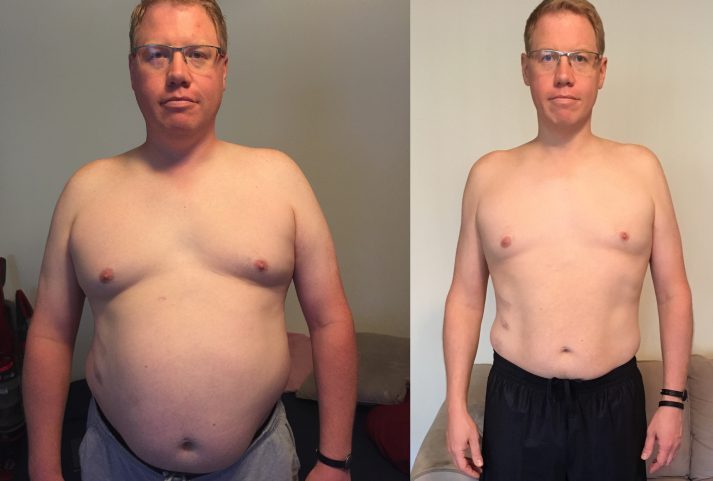
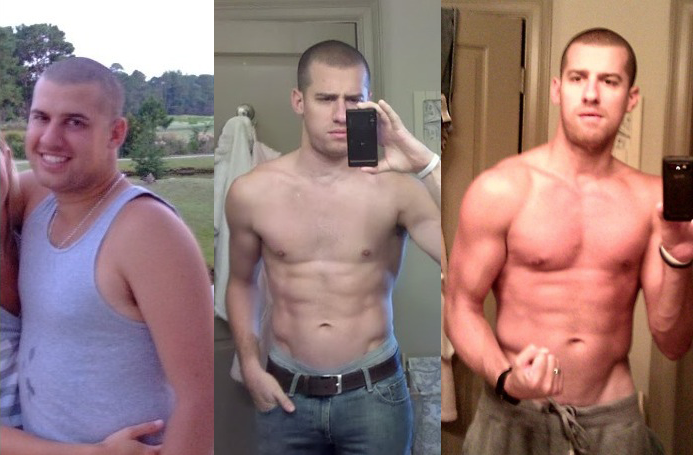
Although I’ve recently added some grains back into my diet to bulk up (oats, flaxseed bread, and brown rice), I can attest to the fact that the Paleo Diet absolutely works. In the four months that I switched to a Paleo diet (my ratio was probably 40% fat, 40% protein, and 20% carbs), my body fat percentage dropped from 12% down to 5%. Besides myself, many NF readers have lost quite a bit of weight from making this change as well.
If you’re interested in giving the Paleo Diet a shot, check out this GREAT resource. Pick a few things on the list, put together your meals, and you will lose weight. If you’re interested in learning more about ‘going paleo,’ Mark’s Primal Blueprint 101 is a great place to get your feet wet.
Cut Out Liquid Calories
Soda, beer, juice, margaritas Gatorade, vitamin water, cappuccinos, fruit coolatas – avoid them whenever possible (except for beer on St. Patty’s Day…come on.) These beverages are all loaded with sugar which immediately turn to fat in your system. And switching from a 12 pack of Coke to a 12 pack of Diet Coke might not solve your problems either. Read my article why Diet Coke might make you fat. My advice: chug water like it’s your job. It will curb your appetite, keep your insides running properly, and give you an excuse to get up and go for a walk to the bathroom every thirty minutes.
No Paleo? Eat Less Than Before!
Don’t want to change what you eat? Welp, you’re just going to count calories (using a site like DailyBurn). It’s a pain in the ass, but it works. Here are the three equations you need to know:
- Calories consumed > Calories burned = weight gain.
- Calories consumed < Calories burned = weight loss.
- 3500 less calories per week = 1 pound of fat weight loss.
As explained in the video above, the types of you food you eat is more important than these equations let on, but just creating a caloric deficit will still produce weight loss (although far less efficiently). Tyler over at 344pounds.com has had incredible results by continuing to eat his favorite foods in moderation. However, along with eating his favorite foods in moderation, Tyler also spends hours and hours in the gym burning off all of those calories, which is incredibly time consuming. I just don’t have that kind of free time and I guess that you don’t either, so why not work smarter instead of harder? Rather than eating bad foods and spending hours working it off, instead eat GOOD foods, put in only 20-30 minutes of solid exercise, and then enjoy the rest of your day. Life’s too short to spend it doing stuff that’s just not necessary.
The Choice Is Yours
I’m not going to yell at you and force you to only eat grilled chicken and steamed vegetables for every meal – I’m not your mom (phew, that would be weird). Besides, you’re a grown individual and you can make choices for yourself.
I AM, however, telling you that if you want to see results without spending hours upon hours in the gym, you need to get your diet under control, and this is the most efficient way for you to get there. The more you can change to what’s been listed above, the quicker you’ll get to your goal weight. Switching to a 100% Paleo Diet after years of eating bad carbs is a recipe for disaster. Instead, try finding a way to implement a change or two along the way until you start to see those results.
I realize this is much easier said than done, which means this isn’t really about your diet: it’s about your will power and finding a good balance of changes that you can successfully manage. Whenever somebody says “I can’t give up that food” or “I just don’t have time to prepare a healthy meal” all I hear is, “I don’t want it badly enough yet.”
I’m okay with that.
If you’re not at that point yet to take control of your life, I’ll do my best to inspire and motivate you to get there…but the desire to change has to come from within you. If you ARE at the point where you really want to make a change, I’m here to help, along with a community of people on our message boards who are there to support you.
Do we have any Paleo Dieters here? How did you successfully make the transition from a modern diet to a healthy one? Do you have concerns about giving up carbs and eating more fat? I’m only writing from experience and my own research, but would love to hear some stories on your weight loss successes or failures and I know others would too.
-Steve
28 Day Challenge Update – On March 1st I put a call out for people to join me on a 28-challenge. Over fifty new people signed up for the Nerd Fitness Message Boards and about a dozen bloggers signed up to post their challenge results on their own websites. Sounds like a dedicated bunch of fools to me. You can follow my challenge here – I’ll be writing every day throughout. Join us!
###
photo: Greg Easton Photography
If you enjoyed this article, sign up for blog updates and free giveaways by joining the Rebel Army Email Newsletter! You can also subscribe via RSS feed.


I've heard a lot about the Paleo diet lately. Frankly, I'm more inclined to try it because…well, it seems to make sense when people talk about it (not like all the other off the wall diets I've heard…) This may be my next challenge to myself when I've completed the 28 Day Challenge and Biggest Lose competition I'm doing right now (don't want to pile too many things on myself all at once).
my body fat percentage dropped from 12% down to 5%
Orly? 5% is damn near bodybuilder stage condition… Just sayin'.
Give up Fake Foods like: rice, potatoes, bread, cereal, pasta, etc. First how is a potato not real food? Or brown and wild rice? What exactly is wrong with Whole Wheat bread and pasta? And don't forget Oatmeal is also a cereal.
I love cereal. So hard to give up. Is something like Kashi any kind of good for you? Its less refined…I think.
Hey Emerson,
Good call man, I changed the content of that section and forgot to change the title of it. Potato is totally a real food, it's just very starchy and caloric. Potatoes and yams are one of the foods that some Paleo people go back and forth on, and most people don't just eat “potato” – it's a baked potato covered and smothered in something, fried and chopped into french fries, etc.
As far whole wheat bread, take a look at the ingredients – a good majority of the “whole wheat” breads out there still have high fructose corn syrup as a main ingredient. Grains in their natural state are still generally inedible by our system which means they need to be processed in some way before being consumed.
Pasta, even whole wheat, is still caloric and carbohydrate heavy.
Here's the best article I know to explain the issue with grains and carbs (including whole wheat pasta) in our system: http://www.marksdailyapple.com/definitive-guide...
However as I've said in the article, I don't eat a completely paleo-diet, as I still add oats to my morning shake, cook some brown rice with my chicken, and have some natural peanut butter with flaxseed bread…but really I only eat this stuff in decent quantities to get my total calorie intake up for the day so that I can add some bulk to my skinny frame.
Thanks for pointing out the issues in the articles, hopefully I addressed your concerns.
-Steve
Yeah, i'm one of the fortunate few to have a naturally skinny build, and honestly I wasn't aiming to get to 5% or anything, I just happened to lose 15-20 pounds when switching to a paleo diet…and it was fat that I didn't even realize I had. I know look bigger and more cut than before, because my muscles are so much more defined.
That being said, I wouldn't mind adding some body fat along with some muscle, which is what I'm trying to do now.
-Steve
Howdy Absentmindedprof,
Yeah, it's one of those concepts I thought was bat-sh*t crazy, until I started reading about it…and it made complete, logical sense to me from a scientific perspective.
It works, it's just almost impossible to implement in today's modern carb-driven, carb recommended world. It requires a lot of preparation and a lot of self-discipline, but it definitely works.
-Steve
I haven't switched to a full paleo diet, but I started cutting back on pasta and rice for meals and it shows in my workout results. It's really simple to take a salad with chicken for lunch, for example, instead of penne with chicken; same for dinner. One thing I've noticed (for me, at least), is that cutting out grains means I need to eat more but substituting fruits/veggies is fine by me. I also haven't given up things like potatoes, beans and dairy which seem to be borderline no-nos for paleo diets, but I needs me some calcium!
Hey Don,
Kashi is probably better for you than something like Lucky Charms or Corn Pops, but it really depends on the cereal. What kind of Kashi specifically? Take a close look at the ingredients, and then how many carbs and g of sugar are in it.
At the end of the day, a bowl of cereal isn't going to do too much damage…as you know there are varying degrees of good carbs and bad carbs, cutting them out completely is the fastest way to weight loss, but minimizing the bad ones and enjoying the good ones in moderation will eventually get you where you need to go.
-Steve
Hey Nick,
Great call man, yeah – the potatoes, beans, and dairy are kind of a grey area on the Paleo spectrum, but I”m okay with it. I've never been a fan of potatoes or beans (well, I like green beans), but I do drink whole milk occasionally – no lactose intolerance for me.
Thanks for chiming in.
-Steve
I have heard a ton about paleo diets recently and have been slowing transitioning to it. I want to do it, I just need to take it slow to get there. I have eaten only fruit for breakfast for a couple weeks now and I am starting to change my other meals as well. It is very difficult for someone on a very low budget and minimal time, but I will get there soon.
My long-term success is going to be centered on real-world application of new habits. So for me, the Paleo diet makes sense in theory, but until I can get a rack of brontosaurus ribs at the drive-in, I don't see it working in practice.
As such, I favor the moderation approach of Tyler@344. However, I don't gorge myself of weekends or binge and hope to work it off in the gym with a 90-minute elliptical session. My end goal is 3x a week MAX at the gym once I've reached a good weight.
For people who feel they can't live without bread, I've found that making my own whole wheat bread from scratch is a good way to make sure that there's no hidden ingredients that I don't want to eat. Other carb-heavy foods that I'm comfortable eating include barley, bulghur wheat, and most varieties of beans. The key is really to have them as unrefined and full of fiber as possible (if I can't buy them in the bulk section at Whole Foods, I generally avoid them).
I run a decent amount, and I've found that my running performance suffers if I severely restrict my carb intake. I'd be curious to know how anyone else who runs a lot feels about this subject.
Read once on AoM: if it doesn't rot, don't eat.
Just found your blog, and can't believe it's taken me this long! Just love it. I am going to read up on that Paleo way of eating. Sounds like something that make work for me, because what I am doing now is not working! Thanks for the post.
here is my blog http://www.eatsleepgetfit.com
Thanks for this article! Im going to try this!
Losing weight without exercise is more likely to result in muscle loss which is not particularly fantastic.
Hey Nathan,
I think a slow transition is fine, especially if it's changes that you can stick with. It is tough on a low budget, as a box of cereal or a box of pasta is way cheaper than chicken and veggies, but do what you can to make it work.
-Steve
Hey Matt,
Fair enough – once Jurassic Park actually happens, brontosaurus ribs for everybody!
I think instead of looking at it like you need to eat exactly what a caveman does, think more in terms of eating foods that work with your system – steaks, chicken, fish, veggies, some fruit, nuts, etc. whenever possible.
If Tyler's approach is working for ya, by all means stick with it! Thanks for the comment.
-Steve
Great call Jeff,
I think endurance athletes have to look at things differently than the rest of us, although there is a whole book called “Paleo Diet For Athletes” that pretty much deals exclusively with runners and triathletes.
Sounds like you're going about this the right way. Making your own bread? that's awesome.
-Steve
Hahahaha, that's great…and pretty accurate.
-Steve
What are the thoughts out there on dairy then? Does this suggest no milk, yogurt or cheese.
Thanks for reading Brittany,
Let me know if there's any way I can help!
-Steve
Nathan,
I've found that eggs and tuna are two great options for low budgets and eating healthy. They're flexible enough to work into a lot of recipes and usually don't require a lot of work for most recipes; they're also both good sources of protein. Just my two cents…hope it helps.
Thanks for the comments! Just went ahead and added your blog to my RSS reader!
-Steve
Howdy,
Sorry to continually reference Mark's Daily Apple, but he just does such a great job of explaining things to the masses, far better than I could. Dairy is a grey area as far as paleo diet goes, but it depends on the kind of dairy:
http://www.marksdailyapple.com/dairy-intolerance/
Hopefully this article helps out, I know it did for me.
-Steve
Hey Andrew, thanks for stopping by,
Yeah, don't get me wrong, I'm definitely not advocating no exercise. I love exercise, and know how important it is for muscle growth and cardiovascular heath (as stated in the first paragraph).
I'm just saying that in terms of pure weight loss, diet is 10x more important than exercise in getting results. I think exercise is also important in that it gets you in the mind frame of wellness, which will continually remind you to eat better.
As far as losing muscle, it generally takes a week or two of non-exercise to begin losing muscle, but that's highly dependent upon genetics and diet. A few intense sessions in the gym, coupled with a GREAT diet, is more than enough to see awesome results.
-Steve
Awesome post as always!! I've heard of the Paleo (what a cool word) diet, but been a little hesitant to try since I am a strict vegetarian and Indian. Most of my meals consist of a main carb (bread or indian roti, or rice) and then a lot of veggies and a tiny bit of cheese and some form of sauce. However, I've been slowly slowly trying to get there, doubling the amount of veggies in the meal and drinking a lot of water to fill up faster. The carbs no doubt are still there, but slow and steady wins the race. I didn't think I would ever get to a point where I choose fruit and salads as my go to for a snack, but I am here:)
Would you say store bought yogurt, like strawberry yoplait , is natural enough? What about fat free chocolate milk? This sounds dummy but I'm not sure:S
Urgh , I made a mistake, I didn't realize no dairy was part of Paleo. For vegetarians, can protein based veggie meat products like (yves burger patties) and veggie deli slices be substituted for the lean meat they suggest? I guess what I can take from the article as most important is, try to eat as many fruits/vegetables and lean meats as possible, keep it simple,stupid!
Going total paleo has been a challenge for me, but I am doing well. Weekdays are easy. I workout, go home, cook meals. Weekends when I'm with people is HARD. I also get cravings for certain things, which I try to think of something super yummy that is *paleo* friendly to replace it with. Meal planning is pretty much a must. I am small, so I haven't been losing weight. Actually, because of my workouts, eating less fattening crap, I am building more muscle and gaining weight. I decided not to go on the scale because who wants to see weight gain! Even if it is muscle.
Hey CurvyGirly,
Dairy is kind of a grey area for paleo, so don't worry too much about having it in there.
Go ahead and read this article: http://www.marksdailyapple.com/dairy-intolerance/, but don't beat yourself up too much about dairy
Exactly, fruits, veggies, nuts, beans are okay, and if you are gonna eat the carbs, try to pick natural ones that are as unprocessed as possible.
-Steve
I couldn't agree more with the basic principles. Calories eaten must be less than calories used.
Thanks for the clarification.
Sure thing, thanks for keeping me honest and on my toes!
-Steve
Was recently warned about mercury levels in most store shelf tuna. Since I am on a budget also, i'm curious what other people know about this?
Hi Steve,
I'm a recent reader and first time commenter. Just want to thank you for this post. I lost 2.8 lbs this past week by changing 80% of my diet to Paleo. That was also with no exercise!
Accidental paleo dieter here.
I think my previous comment on the diet coke post probably should've gone here.
I never knew about the paleo approach back when I made the switch. It was just some conversations about nutrition, common sense about crucial food for body fuel, and a gradual process of incremental improvement.
I love salty savory food. Chips, dry salami, dry rub Texas BBQ. These were my nemeses that I had to shut out.
Everyone has their own personal reason for losing weight. I wasn't looking for weight loss so much as quality of weight — shifting my proportions from fat to muscle. For me, being out of shape and mildly overweight was like lugging around a regulation 35-lb airline carry-on all the time. *I* was the monkey on my own back. So I was looking for a diet shift, not a diet reduction.
I looked at my budget and made a plan of attack that coincidentally fits the “outside wall” diet. I allowed myself $50 / week, picked up lean meat, fruits and veggies, milk, yoghurt, OJ, bulk trail mix, and by then I was out of money. I was also out of hands, as $40-60 will buy you just enough to carry in bags and two hands (I started parking mid to far in the lot and boycotted shopping carts in favor of handbaskets).
I started by substituting one undesirable or relatively expensive (i.e. processed and packaged) item each week for something fruit / veggie / meat that I liked. e.g. Drop all the bottled juices (even 100% juice with no high fructose corn syrup are still expensive for the empty sugar calories they provide) in exchange for a fillet of sockeye salmon. Ditch the ground beef for a personal sized watermelon. Lose the beloved potato chips, pick up a pork chop. Etc.
After about 3 months of aggressive substitution (with a few lapses of will), I'd converted over my entire weekly grocery haul and was mostly consistent.
During that time, I taught myself one new thing to do with each new substituted food, each week or two. The transition was tough at first — and I already knew how to cook without poisoning myself. What I didn't know was how to cook routinely and how to cook certain new items well, like chicken. I could take an hour or two to make some pretty good dishes, but anyone who works full-time and/or has a life can't spare that every day.
To reduce my time spent, I boiled all my cooking down (har har) to two kinds: veggie and meat. I settled for roughly one meal of each per day, lunch and dinner. All three meals of the day had to be quick to make.
Breakfast took some time to divorce me from my Cap'n Crunch and Cocoa Pebbles. I'm still compromising half the week with frosted mini-wheats. I use soy milk b/c I'm lactose-intolerant and my butt trumpet is quite vocal if exposed to cow juice. The rest of the time, I drink half a bottle of kefir yoghurt and eat 1-3 seasonal fruit (apples, tangerines, bananas, pears, kiwis) at work.
For reference, that's about 450 cal, which is more than a recommended ideal 300 x 8 per day. But I only eat/snack about 5x / day. You do what you can.
Veggie lunch was easier for me: Salads. And not your crappy iceberg lettuce with thousand island dressing. I had always hated restaurant salads.
Components are: Foundation, texture, sweet, savory, protein, dressing. Everyone is different. My implementation was spinach, carrot matchsticks (julienne?), peeled tangerine wedges, sliced roma tomatoes, raisins or dried cranberries (no high fructose corn syrup!), crushed walnuts or pecans, crumbled feta cheese, a salmon fillet or some grilled chicken, and a dash of olive oil, fine vinegar, and OJ (for a crude orange vinaigrette).
Sound complicated? It is and it isn't! Just keep the component list in mind, and you can leave most of that stuff out. Almost everything is optional and for taste. At a minimum, leaves and feta cheese are enough (though hideously boring). With 2-3 days' practice I was able to assemble spinach, dressing, and any other 2 optional components in a lunch container ready to go in about 7 minutes. Plus 15 minutes if grilling salmon or chicken, but you can do that once for 3 days' worth of meat, the night before.
Moving into more complicated lunch/dinner stuff…
Steamed veggies are really easy and a good side dish to the meats (see below). Sprinkle a pinch of salt over a bowl of roughly chopped fresh veggies (broccoli, green beans, etc.), some garlic powder, pepper, whatever, then microwave for about 2-3 minutes.
Meats, now:
The oven / broiler is my best friend. At a minimum, the same seasoning treatment for steamed veggies, applied to a salmon fillet, chicken breast, pork chop, whatever will work. A moderate pinch of salt per serving is good — you can always add more for taste, but you can't take out salt easily. Broiling takes about 4-6 mins per side for a fish fillet. 1-2 lbs of chicken and pork cooks in about 45-60 mins at 325 F. With either pyrex bakeware or foil lined metal oven pans, clean up is a lot easier, compared to pots and pans and spattered stovetops for stewing, frying, or sauteeing.
And the best part is you can set the timer, then go check your e-mail or catch up on news online for fish (I prefer bbc.co.uk) making sure to flip it over after 4-6 mins, play about 2-3 rounds of your favorite shooter (Borderlands or Left 4 Dead 2), or 1 round of an RTS game (Dawn of War 2).
These instructions are brutally rough and ready. These are working dishes, not win-a-girl's-heart dishes. Chefs and foodies alike will lynch you if they found out your dirty dishes. But I walk in the door coming home from work, preheat the oven, prep and broil fish complete with a veggie side dish steamed while I wait to flip the fish, ready to eat on my plate in 20 mins. That beats choosing, driving, parking, waiting for a table, ordering, waiting some more, eating, waiting for the check, and driving home from any low-end sit down restaurant you care to name.
Chicken and pork take about 15 mins to prep, but then you can leave it in the oven and multitask for about 30-50 minutes. So that's still about the same hands-on time required as for fish.
After you get good at this in about 1-2 weeks, you'll be ready to explore and expand into lamb chops, turkey meatballs, grilled shrimp, etc. And for seasoning, cayenne pepper, oregano, and whatever else.
Forgot to mention:
This is based on 16 meals a week, b/c I know that 3-5 meals will either go skipped or be with friends or coworkers. At an average of $3.12 / 500 cal tasty healthy home-prepped non-processed non fried low/no-carb meal, I only ever eat out with friends occasionally (and I can keep it light and under $10-15 b/c I know I have tasty leftovers at home in the fridge). Even with a splurge of $70 / week for nicer fruit and meat (say, lamb chops), that's still only $4.38 / 500-600 cal meal.
Trail mix: student mix is one of the best / cheapest I've found. For $5 / lb, you get raisins and a good variety of nuts. It's a yuppier version of the Boy Scouts' tried and true GORP — good old raisins and peanuts. My girlfriend likes non-HFCS (high fructose corn syrup) dried cranberries and sunflower seeds. I use old feta cheese containers or single serving tupperware to pack a couple approximate servings on the go.
Time: We have 168 hrs in a week, less 10 hrs a day for maintenance and upkeep (sleep, shower, poop, etc.). That leaves us 100 hrs for everything else — work, play, meals. If your work is your passion, you can sustain long-term up to 50-70 hrs (or 50-70%) work / week.
For the rest of us who work merely to fund our play and meals, 30-40% work is about what we can handle.
That leaves about 50-60% time for play and feeding. Considering how many of us will short ourselves 1-3 hrs of sleep / night, or 5-10 hrs a week, just to get in one more level or round, or movie or TV episode, why not make it up with less meal time and more sleep / play time?
If eating actually takes about 30 mins or 1 hr for a leisurely evening / weekend outing, then that leaves 45-60 minutes of restaurant selection (the dreaded “Where do you want to eat today?” debate), driving, ordering, etc. etc. that we can now choose to reduce to 15-30 mins of cook prep time.
Assuming a Mickey D's or equiv breakfast order takes 20 minutes to drive, order, and receive, my breakfast can save me about 15 mins; this excludes the 10 mins to actually eat either one. Lunch and dinner, about 30 mins each in “prep” time. We leave in 3-5 meals as dining out for work or social outings (1.5 hrs each on avg, for 6 hrs).
Groceries are a one-time weekly cost of 2 hrs. Let's assume the best indulgences and worst pocketbook hit at $70.
Assume eating out costs $5 for breakfast, $10 for a minimal lunch and $20 for dinner.
All meals out all week: 24.5 hrs; $245.
16 meals home-prepped, 5 meals out: 16.75 hrs + 2 hrs groceries; $70.
(Plus a one-time $50-100 for stuff to cook / eat with at home. My estimates are based on 1 good knife, a cutting board, 1 pot, 1 saucepan, a baking tray, tableware, and 1-2 days' worth of plastic / pyrex microwaveable storage containers.)
You save almost 6 hrs and ~$173 / week and still get to hang out with your friends on the weekend when they go out to eat.
Is it worth it?
That's how much time I spend training and fencing longsword every week. It's 6 TV shows. Or an extra hour of sleep almost every night.
Or as dollars: US median income is approx $19 / hr, ($38,940 2009 annual). The money saved is equivalent to working 9 extra hours *every* damn week, 50 weeks a year.
Plus there's the intangible benefit of working towards being a sexy cooking machine who's comfortable with serving up a candle-lit dinner worth at least $40-80 at a restaurant — for only $15-20 out of pocket.
But it's your call. My virtues could be your inconveniences and vice versa. I hope this gives you some food for thought.
Accidental paleo dieter here.
I think my previous comment on the diet coke post probably should've gone here.
I never knew about the paleo approach back when I made the switch. It was just some conversations about nutrition, common sense about crucial food for body fuel, and a gradual process of incremental improvement.
I love salty savory food. Chips, dry salami, dry rub Texas BBQ. These were my nemeses that I had to shut out.
Everyone has their own personal reason for losing weight. I wasn't looking for weight loss so much as quality of weight — shifting my proportions from fat to muscle. For me, being out of shape and mildly overweight was like lugging around a regulation 35-lb airline carry-on all the time. *I* was the monkey on my own back. So I was looking for a diet shift, not a diet reduction.
I looked at my budget and made a plan of attack that coincidentally fits the “outside wall” diet. I allowed myself $50 / week, picked up lean meat, fruits and veggies, milk, yoghurt, OJ, bulk trail mix, and by then I was out of money. I was also out of hands, as $40-60 will buy you just enough to carry in bags and two hands (I started parking mid to far in the lot and boycotted shopping carts in favor of handbaskets).
I started by substituting one undesirable or relatively expensive (i.e. processed and packaged) item each week for something fruit / veggie / meat that I liked. e.g. Drop all the bottled juices (even 100% juice with no high fructose corn syrup are still expensive for the empty sugar calories they provide) in exchange for a fillet of sockeye salmon. Ditch the ground beef for a personal sized watermelon. Lose the beloved potato chips, pick up a pork chop. Etc.
After about 3 months of aggressive substitution (with a few lapses of will), I'd converted over my entire weekly grocery haul and was mostly consistent.
During that time, I taught myself one new thing to do with each new substituted food, each week or two. The transition was tough at first — and I already knew how to cook without poisoning myself. What I didn't know was how to cook routinely and how to cook certain new items well, like chicken. I could take an hour or two to make some pretty good dishes, but anyone who works full-time and/or has a life can't spare that every day.
To reduce my time spent, I boiled all my cooking down (har har) to two kinds: veggie and meat. I settled for roughly one meal of each per day, lunch and dinner. All three meals of the day had to be quick to make.
Breakfast took some time to divorce me from my Cap'n Crunch and Cocoa Pebbles. I'm still compromising half the week with frosted mini-wheats. I use soy milk b/c I'm lactose-intolerant and my butt trumpet is quite vocal if exposed to cow juice. The rest of the time, I drink half a bottle of kefir yoghurt and eat 1-3 seasonal fruit (apples, tangerines, bananas, pears, kiwis) at work.
For reference, that's about 450 cal, which is more than a recommended ideal 300 x 8 per day. But I only eat/snack about 5x / day. You do what you can.
Veggie lunch was easier for me: Salads. And not your crappy iceberg lettuce with thousand island dressing. I had always hated restaurant salads.
Components are: Foundation, texture, sweet, savory, protein, dressing. Everyone is different. My implementation was spinach, carrot matchsticks (julienne?), peeled tangerine wedges, sliced roma tomatoes, raisins or dried cranberries (no high fructose corn syrup!), crushed walnuts or pecans, crumbled feta cheese, a salmon fillet or some grilled chicken, and a dash of olive oil, fine vinegar, and OJ (for a crude orange vinaigrette).
Sound complicated? It is and it isn't! Just keep the component list in mind, and you can leave most of that stuff out. Almost everything is optional and for taste. At a minimum, leaves and feta cheese are enough (though hideously boring). With 2-3 days' practice I was able to assemble spinach, dressing, and any other 2 optional components in a lunch container ready to go in about 7 minutes. Plus 15 minutes if grilling salmon or chicken, but you can do that once for 3 days' worth of meat, the night before.
Moving into more complicated lunch/dinner stuff…
Steamed veggies are really easy and a good side dish to the meats (see below). Sprinkle a pinch of salt over a bowl of roughly chopped fresh veggies (broccoli, green beans, etc.), some garlic powder, pepper, whatever, then microwave for about 2-3 minutes.
Meats, now:
The oven / broiler is my best friend. At a minimum, the same seasoning treatment for steamed veggies, applied to a salmon fillet, chicken breast, pork chop, whatever will work. A moderate pinch of salt per serving is good — you can always add more for taste, but you can't take out salt easily. Broiling takes about 4-6 mins per side for a fish fillet. 1-2 lbs of chicken and pork cooks in about 45-60 mins at 325 F. With either pyrex bakeware or foil lined metal oven pans, clean up is a lot easier, compared to pots and pans and spattered stovetops for stewing, frying, or sauteeing.
And the best part is you can set the timer, then go check your e-mail or catch up on news online for fish (I prefer bbc.co.uk) making sure to flip it over after 4-6 mins, play about 2-3 rounds of your favorite shooter (Borderlands or Left 4 Dead 2), or 1 round of an RTS game (Dawn of War 2).
These instructions are brutally rough and ready. These are working dishes, not win-a-girl's-heart dishes. Chefs and foodies alike will lynch you if they found out your dirty dishes. But I walk in the door coming home from work, preheat the oven, prep and broil fish complete with a veggie side dish steamed while I wait to flip the fish, ready to eat on my plate in 20 mins. That beats choosing, driving, parking, waiting for a table, ordering, waiting some more, eating, waiting for the check, and driving home from any low-end sit down restaurant you care to name.
Chicken and pork take about 15 mins to prep, but then you can leave it in the oven and multitask for about 30-50 minutes. So that's still about the same hands-on time required as for fish.
After you get good at this in about 1-2 weeks, you'll be ready to explore and expand into lamb chops, turkey meatballs, grilled shrimp, etc. And for seasoning, cayenne pepper, oregano, and whatever else.
Forgot to mention:
This is based on 16 meals a week, b/c I know that 3-5 meals will either go skipped or be with friends or coworkers. At an average of $3.12 / 500 cal tasty healthy home-prepped non-processed non fried low/no-carb meal, I only ever eat out with friends occasionally (and I can keep it light and under $10-15 b/c I know I have tasty leftovers at home in the fridge). Even with a splurge of $70 / week for nicer fruit and meat (say, lamb chops), that's still only $4.38 / 500-600 cal meal.
Trail mix: student mix is one of the best / cheapest I've found. For $5 / lb, you get raisins and a good variety of nuts. It's a yuppier version of the Boy Scouts' tried and true GORP — good old raisins and peanuts. My girlfriend likes non-HFCS (high fructose corn syrup) dried cranberries and sunflower seeds. I use old feta cheese containers or single serving tupperware to pack a couple approximate servings on the go.
Time: We have 168 hrs in a week, less 10 hrs a day for maintenance and upkeep (sleep, shower, poop, etc.). That leaves us 100 hrs for everything else — work, play, meals. If your work is your passion, you can sustain long-term up to 50-70 hrs (or 50-70%) work / week.
For the rest of us who work merely to fund our play and meals, 30-40% work is about what we can handle.
That leaves about 50-60% time for play and feeding. Considering how many of us will short ourselves 1-3 hrs of sleep / night, or 5-10 hrs a week, just to get in one more level or round, or movie or TV episode, why not make it up with less meal time and more sleep / play time?
If eating actually takes about 30 mins or 1 hr for a leisurely evening / weekend outing, then that leaves 45-60 minutes of restaurant selection (the dreaded “Where do you want to eat today?” debate), driving, ordering, etc. etc. that we can now choose to reduce to 15-30 mins of cook prep time.
Assuming a Mickey D's or equiv breakfast order takes 20 minutes to drive, order, and receive, my breakfast can save me about 15 mins; this excludes the 10 mins to actually eat either one. Lunch and dinner, about 30 mins each in “prep” time. We leave in 3-5 meals as dining out for work or social outings (1.5 hrs each on avg, for 6 hrs).
Groceries are a one-time weekly cost of 2 hrs. Let's assume the best indulgences and worst pocketbook hit at $70.
Assume eating out costs $5 for breakfast, $10 for a minimal lunch and $20 for dinner.
All meals out all week: 24.5 hrs; $245.
16 meals home-prepped, 5 meals out: 16.75 hrs + 2 hrs groceries; $70.
(Plus a one-time $50-100 for stuff to cook / eat with at home. My estimates are based on 1 good knife, a cutting board, 1 pot, 1 saucepan, a baking tray, tableware, and 1-2 days' worth of plastic / pyrex microwaveable storage containers.)
You save almost 6 hrs and ~$173 / week and still get to hang out with your friends on the weekend when they go out to eat.
Is it worth it?
That's how much time I spend training and fencing longsword every week. It's 6 TV shows. Or an extra hour of sleep almost every night.
Or as dollars: US median income is approx $19 / hr, ($38,940 2009 annual). The money saved is equivalent to working 9 extra hours *every* damn week, 50 weeks a year.
Plus there's the intangible benefit of working towards being a sexy cooking machine who's comfortable with serving up a candle-lit dinner worth at least $40-80 at a restaurant — for only $15-20 out of pocket.
But it's your call. My virtues could be your inconveniences and vice versa. I hope this gives you some food for thought.
You look like a million dollars.