Download Our Free Tools
Workouts, nutrition guidance, and habit-building. Never wonder where you should put your limited time, energy, and effort.
Get our FREE Starter Kit with dozens of resources today!

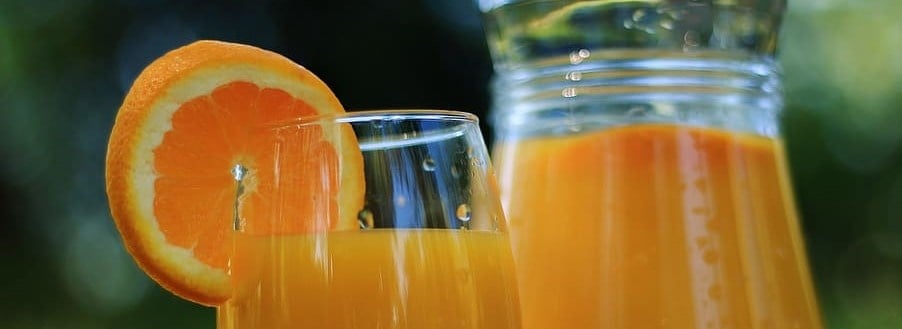
It’s time to learn how fruit juice fits into a healthy diet.
You may be wondering: Is drinking fruit juice a good idea? Or is it really just like popping a can of soda?
We help navigate food and drink choices as part of our 1-on-1 Online Coaching Program, and we are really flippin’ good at it! So you’ve come to the right place to get the lowdown on fruit juice.
Here’s what we’ll cover to answer the question, “Is drinking fruit juice healthy?”

Fruit juice is mostly just sugar water.
Mostly.
But we can’t discount the nutrients contained in fruit juice.
Depending on the source, many of the vitamins and minerals in whole fruit can be found in its juice counterpart.[1]
Noticed I said “source.” Quality matters when it comes to fruit juice.
There’s a big difference between orange juice you squeezed yourself and Hawaiian Punch.

Quality of juice aside, our recommendation would be to actually eat the entire fruit, because of the importance of fiber (covered next)
All this to say: if you are going to drink a sugary beverage, nutrients are a good thing, so you can do worse than high-quality fruit juice.
Just know that you are sending a bunch of sugar water straight into your stomach.
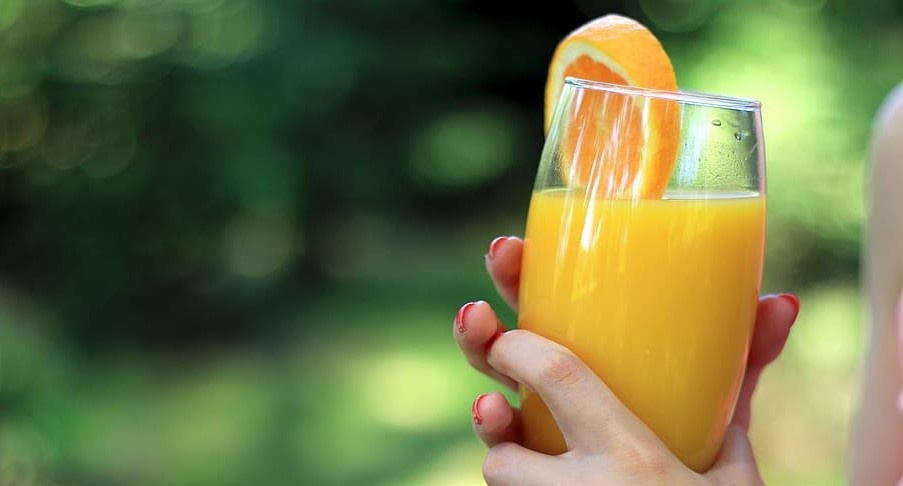
To understand the downside of drinking fruit juice, we need to think about what’s missing: fiber.
Fruit juice, almost by definition, is the juice that’s been squeezed or processed out of fruit.
With the exception of small amounts of pulp here and there, the juicing process completely removes the fiber from fruit.
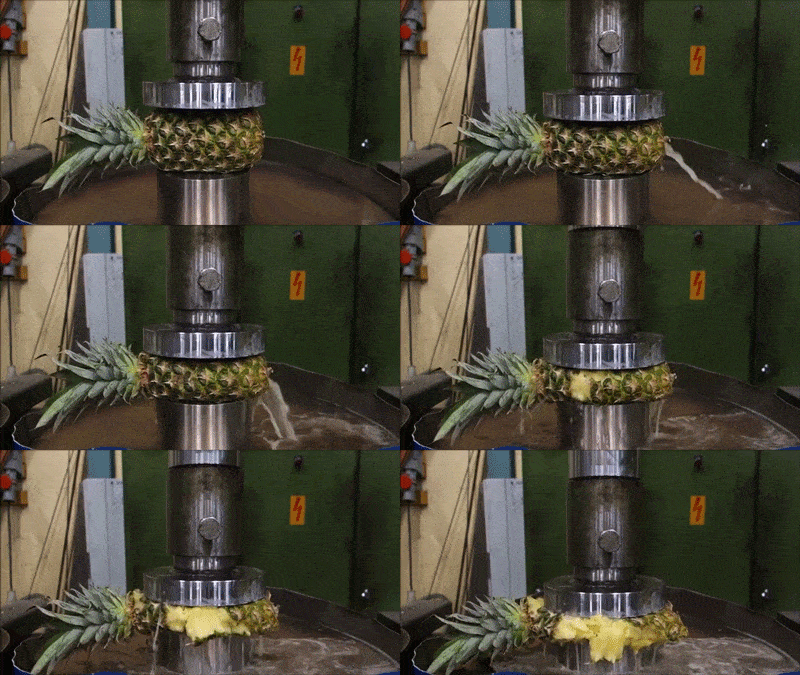
Without the fiber, all you’re left with is water, fructose (sugar), and some nutrients.
The complete lack of fiber in fruit juice proves problematic for two reasons:
Your liver is the only organ that processes fructose.[2] If it’s overloaded, like with lots of fructose at once, it can turn some of this fructose into fat.
Overloading your liver with fructose is a bad idea. It’s one of the ways people end of with fatty liver disease (another is overconsuming alcohol, which also taxes the liver).[3]
Whole fruit is healthy for you because the fiber stops the fructose from hitting you all at once.
Fruit juice? Eh, not so much.
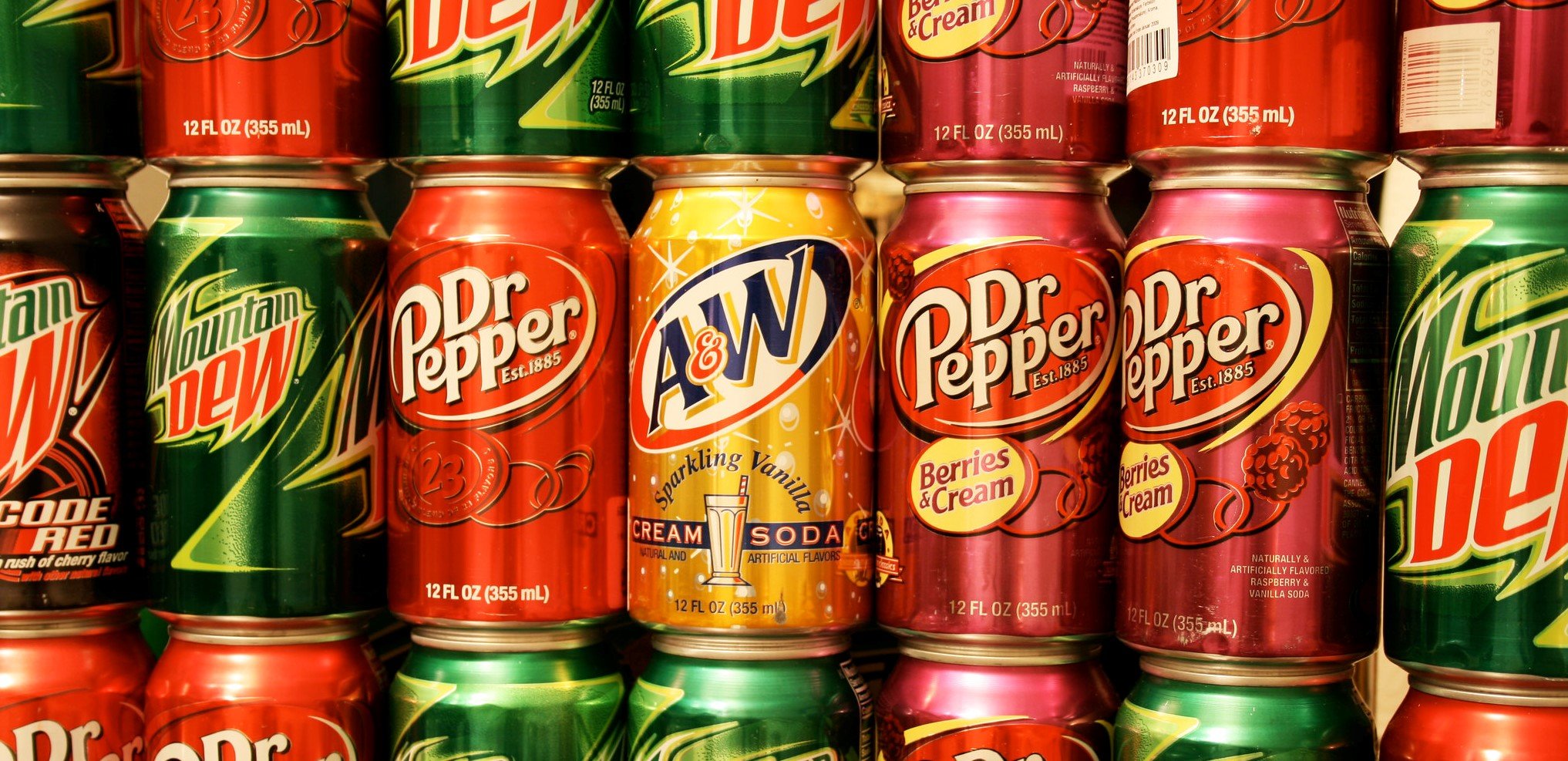
How does drinking fruit juice compare to drinking soda?
Some numbers will help tell our story.
Let’s look at the calories and sugar content of orange juice and a Coca-Cola:
Orange juice (12-ounce glass)
Coca-Cola (12-ounce can)
Isn’t that interesting.
While there’s more sugar in Coca-Cola, there are actually fewer calories.
Plus, Coca-Cola is carbonated and caffeinated.
And polar bears love it.

I’m not trying to tell you to start drinking Coca-Cola.
Although if you go with diet soda, you’ll cut out almost all of the calories and sugar.
I’m trying to make the point here that when it comes to calories and sugar, there isn’t that much of a difference between drinking soda and drinking fruit juice.

If we’re gonna talk about drinking fruit juice for weight loss, we’re gonna need to talk about how to actually lose weight.
In order to lose weight, we need to burn more calories than we consume regularly.[4]
Think of it this way: every day, our body needs a certain number of calories to carry out its daily functions. Making your heart beat, your brain function, and getting your body to move all require calories.
This is called your total daily energy expenditure, and you can calculate your TDEE here.
The problem with drinking fruit juice is this: it’s a really easy way to bump up your total calorie intake.
Let’s compare:
12oz Minute Maid Apple Juice
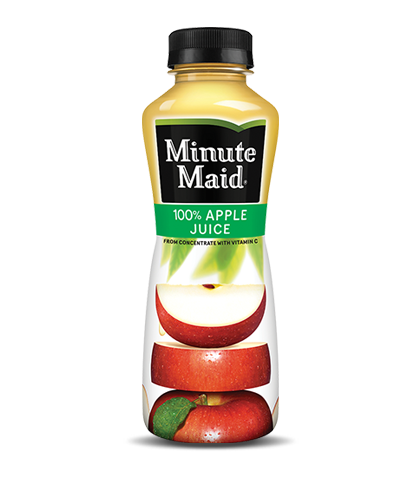
Calories: 180
Sugar: 45g
A Plate of Sliced Up Apple (about two apples)
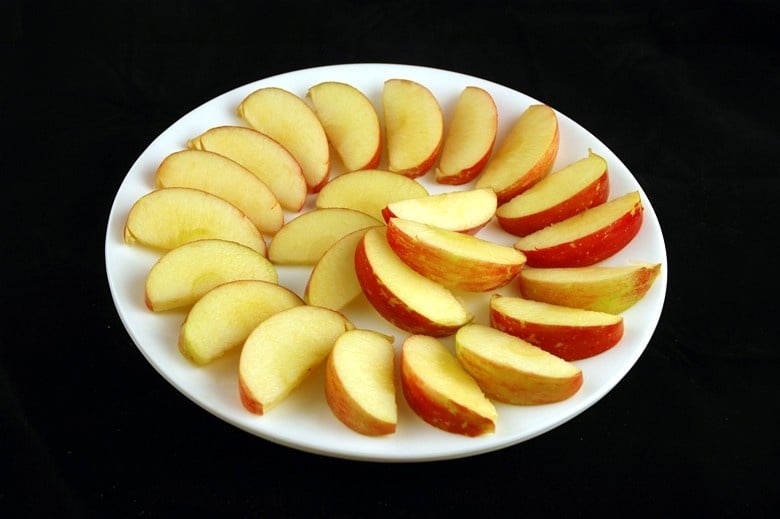
Calories: 200
Sugar: 40g
A 12-ounce glass of apple juice and a couple of apples would be roughly equivalent in their calorie and sugar content.
What they will NOT be equivalent in is their ability to keep you full.[5]
After eating one apple, consuming a second one might be tough. A third one could be a real challenge.
Do you have any doubt you could drink that entire bottle of apple juice? Would you still be hungry after drinking it? Probably.
This is another danger of drinking your fruit: you’ll get all the calories, without satisfying your hunger.
That’s why one of our top recommendations in our Guide to Healthy Eating is to avoid liquid calories. When we assess our coaching clients, we find out how many calories they are currently drinking, and then create a plan to ease it back.
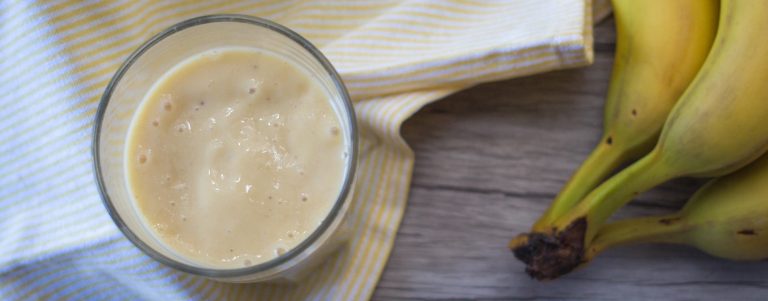
Whether or not fruit smoothies are healthy is really going to depend on what’s in them.
On the one hand, because they are often blended instead of juiced, there is still the fruit’s fiber in the smoothies.
However, Dr. David Ludwig of Harvard Medical School claims that the fiber has been “functionally destroyed” through the blender, so there are still issues on how fast the fructose from the fruit will hit your liver.[6]
Plus, there are all the calories to worry about.
Here are a couple of examples:
Yikes.
The abundance of sugar and calories in these common smoothies drove us to create this:
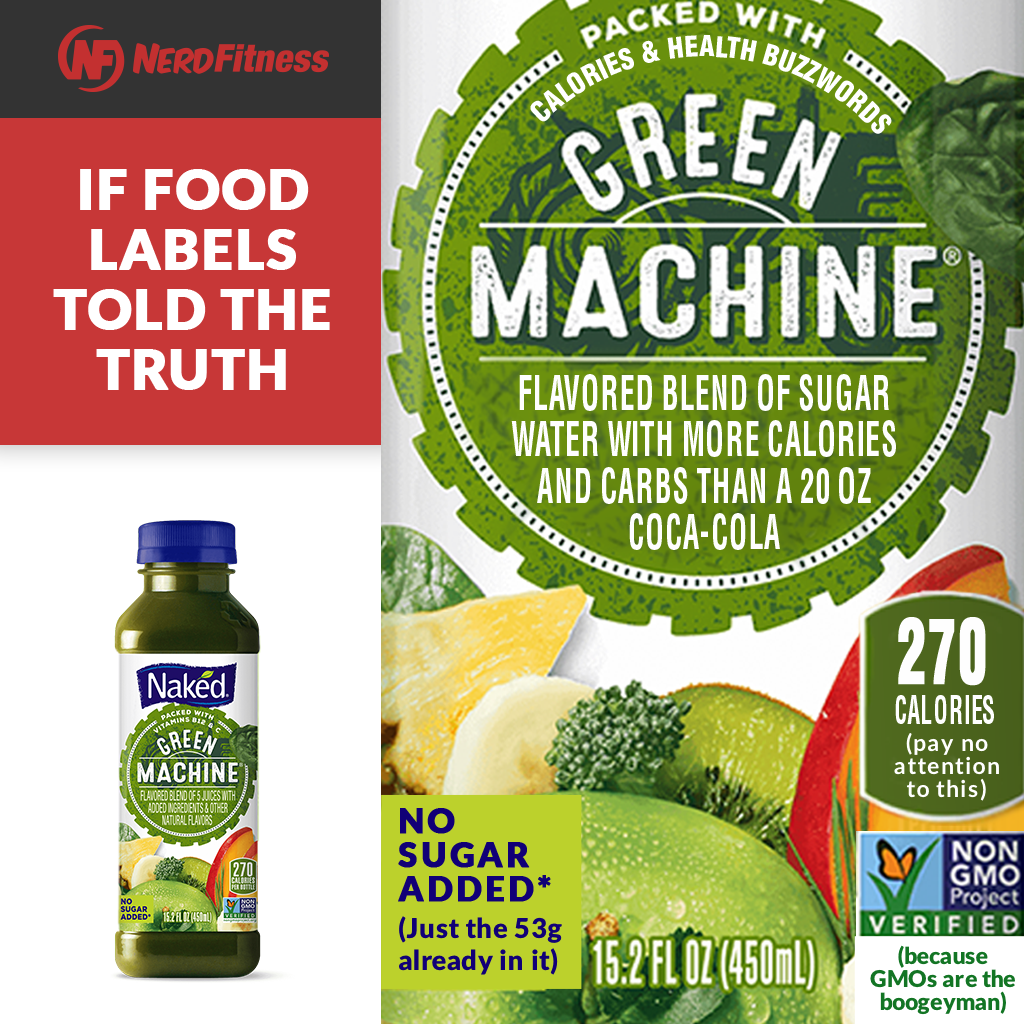
However, for those of us who supplement with extra protein, a smoothie is often the best way for delivery.
I drink a shake daily to meet my high-calorie, high-protein goals, and it includes some fruit in it.
STEVE’S POWERBOMB SHAKE
Here’s the macronutrient and caloric breakdown of that shake: 795 calories, 68g of protein, 106g of carbs, 13g of fat:
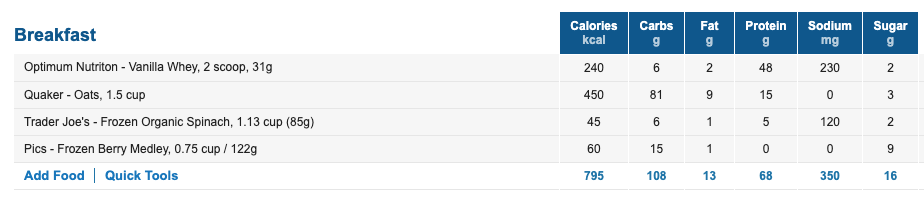
Yep, it’s a ton of calories. But I need them (and the protein) to help me reach my muscle-building goals.
In summary:
To answer the question of “how much fruit juice you should be drinking,” we need to factor in a crucial variable: how much fruit juice are you currently drinking?
While there’s plenty of best practices throughout Nerd Fitness, the advice we give is often based on what you’re doing today:
We’ve seen time and time again that small changes over time are the secret to long term success.
Instead of telling you to never drink fruit juice again and to always eat the whole fruit, let’s figure out where you are today and make a plan for a small change. Something we can track for long term compliance and adjust along the way.
If you need a plan specific plan to follow, our entire Guide on Healthy Eating is based on small incremental changes designed to be permanent.
If you don’t know where to start on your journey to an improved diet, start there.
That should help you get started.

Want a little more help getting going? A little nudge out the door?
Alright, I’ll give you my favorite next steps. But only caused you asked nicely.
#1) Our 1-on-1 Online Coaching program: a coaching program for busy people to help them make better food choices, stay accountable, and get healthier, permanently.
You can schedule a free call with our team so we can get to know you and see if our coaching program is right for you. Just click on the image below for more details:
#2) The Nerd Fitness Academy: this self-paced online course has helped 50,000 people get results permanently.
There’s a 10-level nutrition system, boss battles, 20+ workouts, and the most supportive community in the galaxy!
#3) Join The Rebellion! We have a free email newsletter that we send out twice per week, full of tips and tricks to help you get healthy, get strong, and have fun doing so.
I’ll also send you tons of free guides that you can use to start leveling up your life too:
That just about does it for our article today.
Now, your turn!
Do you start every morning with a glass of OJ?
Have you moved from fruit juices to the whole fruit?
Or do you think I’m being too hard on liquid produce?
Let me know in the comments!
-Steve
PS: Make sure you check out “Is Fruit Healthy?” for more tips on how to include whole fruit into your diet.
###
Photo Source: Apples, Apple Juice, Orange Juice, Drinking OJ, Orangemobile, Morning run with the fitbit, banana smoothie, Squeeze Orange, Soda Cans,
GIF Source: Polar Bear, Hawaiian Punch, Wayne, Press.
Workouts, nutrition guidance, and habit-building. Never wonder where you should put your limited time, energy, and effort.
Get our FREE Starter Kit with dozens of resources today!