
I get multiple emails and messages per day asking:
“Steve, what should I do for a workout?”
Well, partner, today is your lucky day.
I’m gonna help build you a custom workout program, step-by-step!
After all, a workout should be developed around a person’s training age, goals, injury history, free time, and available equipment, not to mention things you ENJOY doing!
Considering all those factors, it’s easy to overcomplicate this process. There are a seemingly infinite number of exercises, sets, reps, and programs to choose from. Don’t worry – together, we’ll cut through the noise and get to the good stuff.
Now, if you’re somebody that wants to skip all of that, and JUST be told what exactly to do:
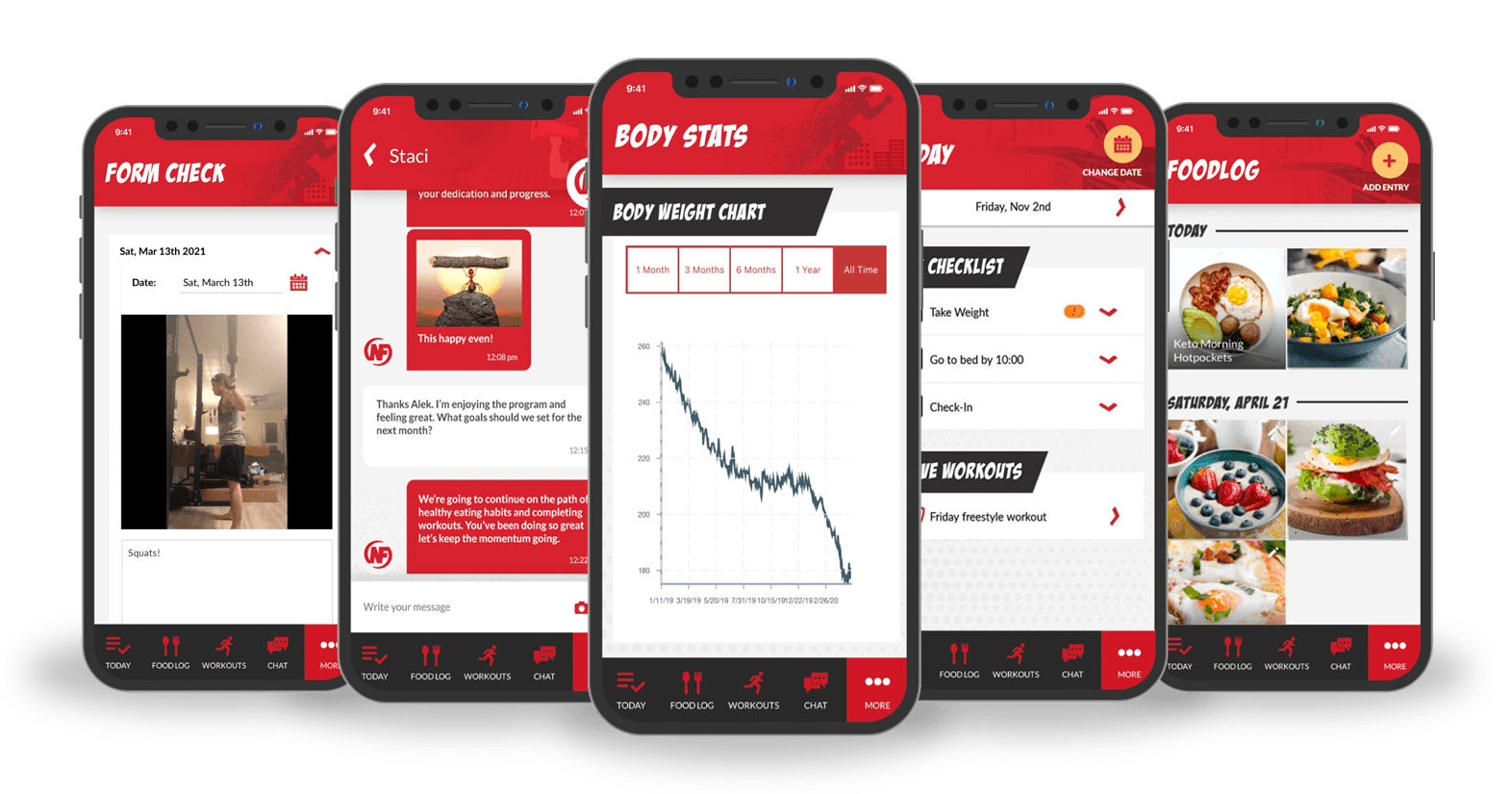
We build customized workouts for our Online Coaching Clients and would love to have you. We get to know your story: your goals, challenges, and lifestyle. Then we develop a workout plan specific to your schedule and needs.
Now, if you’re more of a “figure this stuff out on my own” kind of person – we’re going to dig into how to build your own workout plan today!
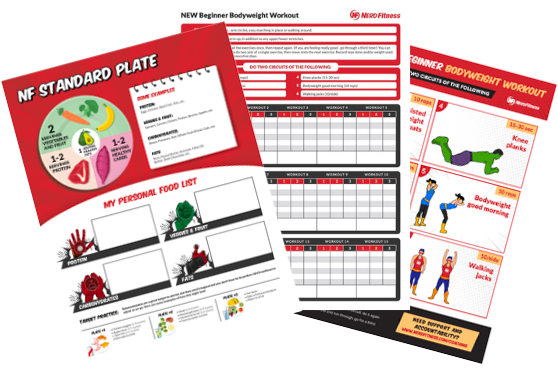
We’ve also created a free resource you can take with you, Strength Training 101: Everything You Need to Know, which covers all of this stuff in a single guide. You can download it here:
OKAY! Are you ready to start building your own routine?
Great! Let’s do this:
- Step #1: Determine your starting point
- Step #2: “What exercises should I do to lose weight (or build muscle)?”
- Step #3: “How many sets and reps should I do per exercise?”
- Step #4: “How long should I wait between sets?”
- Step #5: “How much weight should I lift?”
- Step #6: “How long should I exercise for?“
- Step #7: How to create supersets and circuit training workouts.
- Step #8: “How many days per week should I train?”
- Step #9: How to record your workouts and progress.
- “Steve, just BUILD a workout for me!”
Step #1: Determine Your Starting Point
As Coach Staci lays out in the video above, we need to answer a few key questions when designing a workout:
QUESTION 1: What are your goals?
- Are you trying to lose weight? Awesome.
- Are you trying to bulk up or build muscle? Great.
- Are you preparing for your first 5k? Swell.
Whatever your goals are, it’s good to write them down and be aware of what you’re trying to accomplish.
These goals will shape HOW you build your workout.
An effective way to create goals is by using the SMART method, which stands for specific, measurable, attainable, relevant, and timely.[1]
- Specific – Specifically state what is to be accomplished. For example, “I want to gain 5 pounds of muscle.” (In this article we’ll cover how to build a workout to help you lose weight, build muscle, and get stronger. If you have specific goals like getting your first pull-up, getting your first push-up, or running your first 5k, we have articles covering each of these in detail.)
- Measurable – Find a way to measure your progress. For example, you will need body composition equipment to assess your fat and muscle mass.
- Attainable – Your goals should be realistically attainable. For example, a realistic rate of muscle gain is up to 0.5 pounds per week. To gain 5 pounds of muscle, 10 weeks would be an attainable starting point.
- Relevant – Your goals must relate to your interests, needs, likes/dislikes, and abilities. Another thing to remember is that your goals need to be generated by you and you alone! For example, if you don’t care about gaining 5 pounds of muscle, or aren’t quite sure how this will benefit your life, then this isn’t a great goal for you!
- Timely – Your goals must have a timeline for completion. If your goal is to gain 5 pounds of muscle then a reasonable end-point should be at minimum 10 weeks.
If you are struggling with your goals, revisit the SMART framework and see if you can tweak your goals to work better for you.
QUESTION 2: How much time can you devote to exercise?
If you can do an hour a day, that’s fantastic.
But maybe you have a wife or husband, three kids, a dog, two jobs, and no robot butler…
…then maybe you only have thirty minutes, twice a week.
That’s fine too!
In the past 15 years of working with folks from all walks of life, we’ve realized there’s a warped sense of HOW much working out is needed to achieve your goals. For many of our 1-on-1 coaching clients, working out 2 to 4 times per week for 30 to 45 minutes is PLENTY to see some serious progress. (And as Staci mentioned in the video above, even 1 workout per week can work, especially for beginners!)
Another key thing to remember: your workout doesn’t have to happen all at once! According to the American College of Sports Medicine (ACSM), if you accumulate three 10-minute bouts of exercise throughout the day to total 30 minutes of exercise, then that is as effective as someone who does one 30-minute bout of exercise.[2]
Now, no matter how much time you have, developing the most efficient workout is crucial.
Why spend two hours in a gym when you can get just as much accomplished in 30 minutes, right?
Here’s the good news: weight training is the fat-burning prize fight victor, and efficiency rules all.
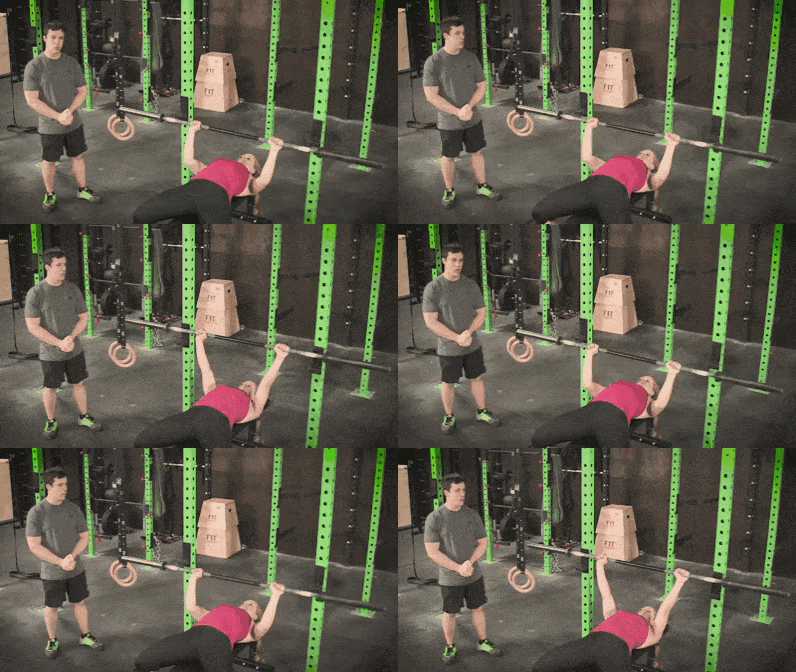
So whether you are building muscle or looking to lose weight, a strength training workout will get you the results you’re after (when combined with the right eating strategy!)
While we’re talking about time, let me quickly mention something important:
Proper expectations!
As we cover “How Fast Can I Get the Body I Want,” make sure you are thinking about your journey with a realistic timeline:
As we mention in that guide, here are some realistic timeframes for weight loss or muscle gain:[3]
- For weight loss, a realistic rate is 0.5-1% of body weight per week. For example, if you weigh 200 pounds with a weight loss goal of 0.5% per week, your goal would be a 500-calorie-per-day deficit.
- For muscle gain, a realistic rate is 0.25-0.5% of body weight per week. For example, if you weigh 200 pounds with a muscle gain goal of 0.25% per week, your goal would be a 250-calorie-per-day surplus.
QUESTION 3: WHERE do you want to work out?
- At a gym? Here’s a Beginner’s Gym Guide with 6 levels of workouts.
- At home? Have you tried our Beginner Bodyweight Workout or our Beginner Dumbbell Workout?
- In a park? Try our park workout. Or maybe some parkour.
Where you work out will largely determine if you are going to train with your body’s weight, or if you can start doing gym strength training.
If you’re paying attention here, you may notice I’m setting you up to work out no matter what your current situation is.
Why?
Because according to ACSM, the #1 reason people don’t exercise is:[4]
They don’t have time for it.

All of us, all the time.
BUT, with the information I’m hitting you with, technically you should have no excuse for not exercising unless (you’re injured or sick).
After all, your workout:
- Can be accumulated with just 10-minute bouts of exercise throughout the day.
- Doesn’t need to be done with a gym membership.
- Can be done with exercises in the comfort of your own home or while outside (weather permitting).
Cool?
Cool.
RECAP OF QUESTIONS – At this point, we have:
- Determined your “get in shape” goals.
- Decided how much time you have to train.
- Picked WHERE you want to work out.
We can now start to build your workout routine, your daily workout plan, and your monthly workout schedule!
Let’s do it.
Step #2: What Exercises Should I Do To Lose Weight (Or Build Muscle?)
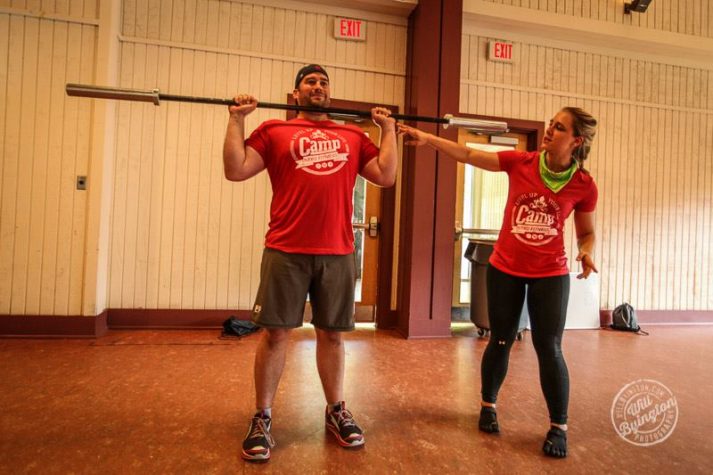
I like to follow the motto of “Keep it simple, stupid.”
(Note: I am not calling you stupid. You’re reading Nerd Fitness, which means you’re intelligent, good-looking, really funny, and most of all, modest.)
The best workout is the one that you actually stick with, and people make things FAR too complicated and try to target a bazillion different individual muscles with six types of exercises for each body part.
It’s exhausting, unnecessary, inefficient, and intimidating.
So keep it simple!
We will pick 4 exercises and get really strong with those movements.

This is the ENTIRE philosophy behind our Strength 101 series.
Unless you’ve been strength training for years and know what you’re doing, we recommend a full-body routine that you can do 2-3 times a week.
You want a workout routine that has at least one exercise for your:
- Quads (front of your legs).
- Butt and hamstrings (back of your legs).
- Chest, shoulders, and triceps: (“push” muscles).
- Back, biceps, and grip ( “pull” muscles).
I have a trick for you: by targeting compound movements that recruit multiple muscles at the same time, you can build a full-body routine that uses only a handful of exercises.
How’s THAT for efficiency!?!
A compound exercise would be the yin to the yang of the isolation exercise.
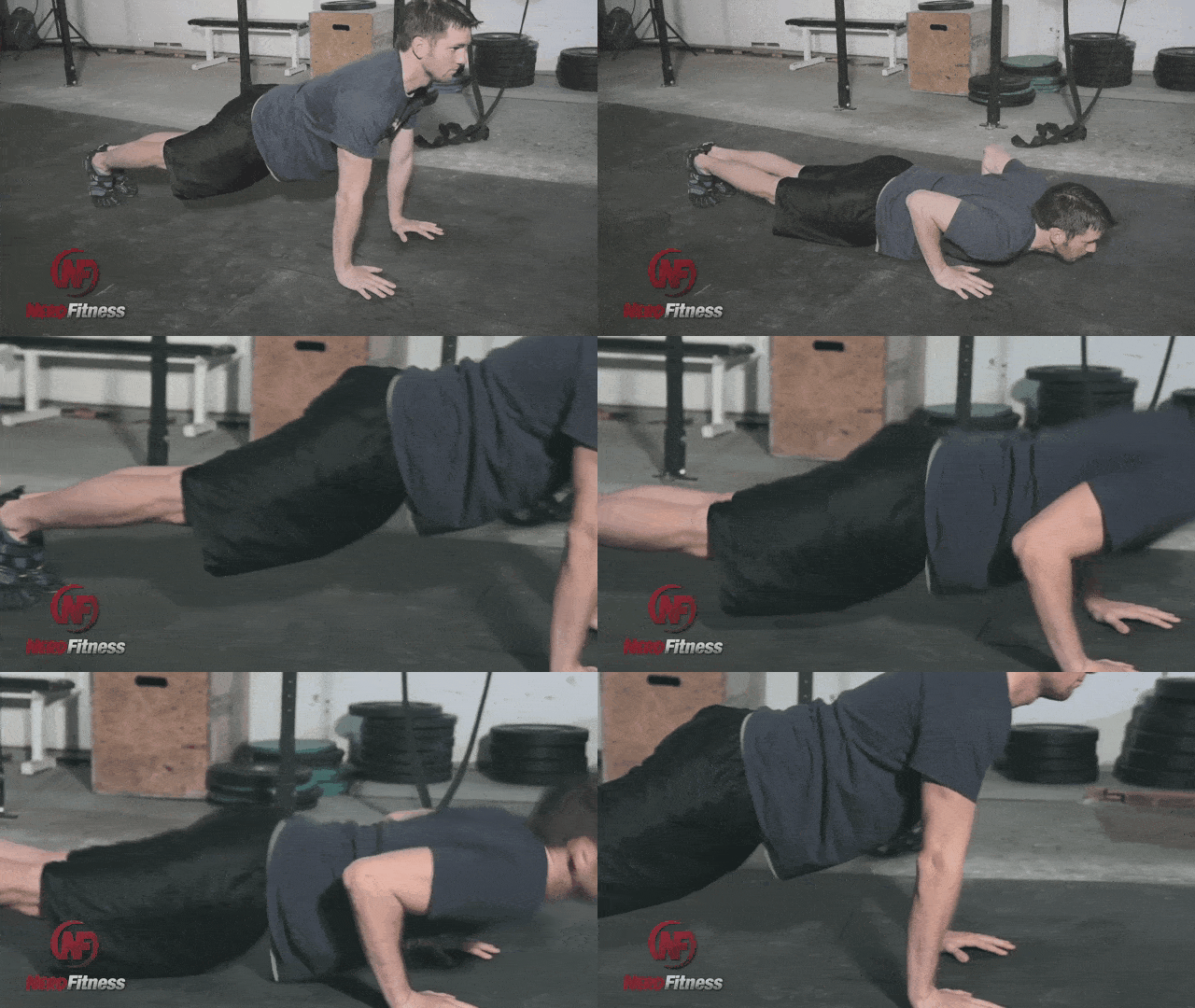
Think of a push-up (compound):
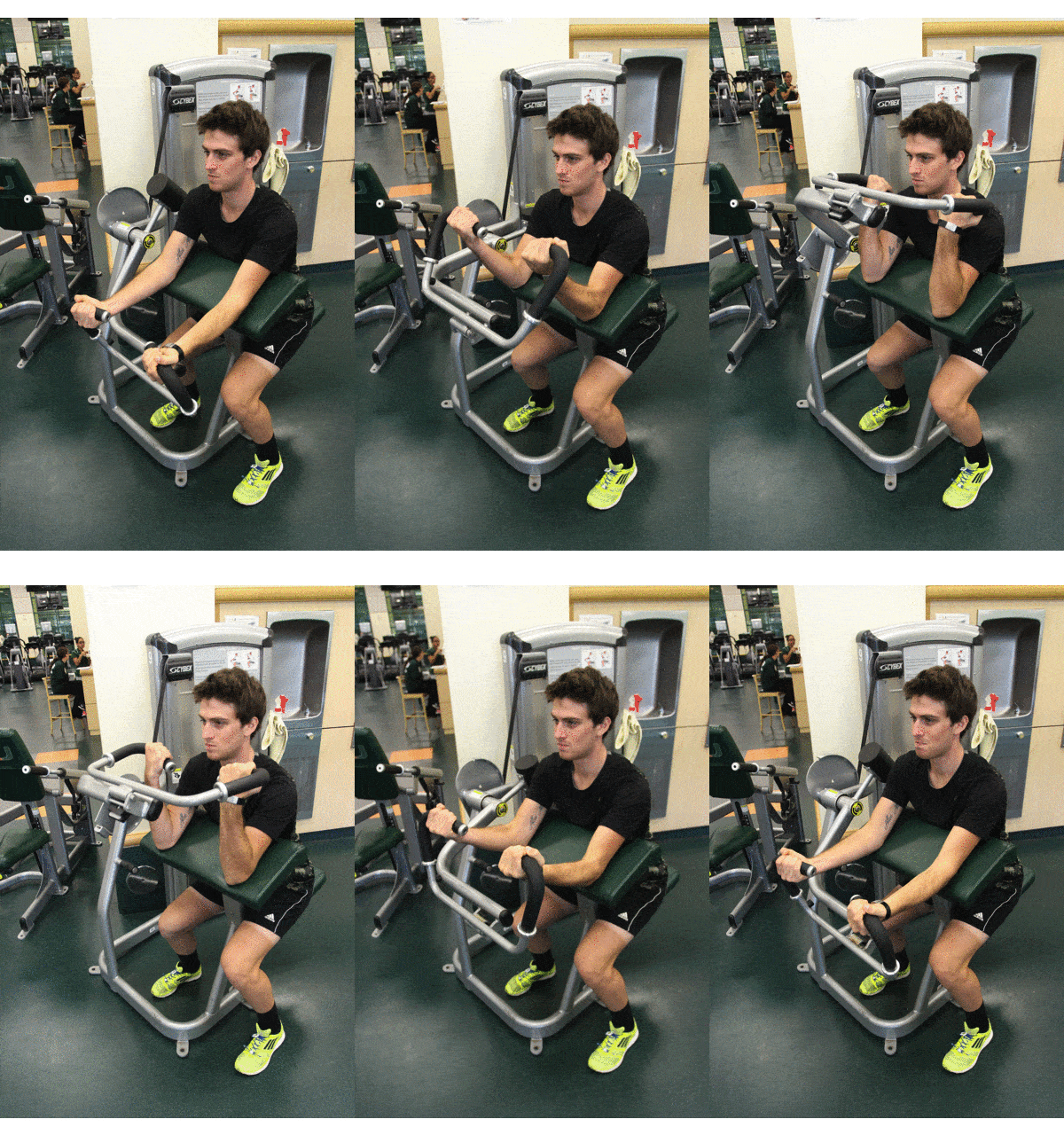
Compared to bicep curls through a machine (isolation):
Compound exercises have been found to result in improvements in aerobic endurance, muscular fitness, and flexibility, since you’re recruiting all sorts of muscle groups at once.[5]
Isolation exercises, on the other hand, focus on single-joint movements targeting one specific muscle group, like the biceps curl above.
Both compound and isolation exercises have a time and place in your training program.
As you get more advanced, isolation exercises are great for targeting specific muscles to promote further strength or development. They can also help beginners who struggle to “feel” their muscles working in specific movements learn more body awareness and control.
However, for people looking to lose weight, add some muscle, and get stronger – we recommend you start with predominantly compound exercises because of the huge return on investment for your time invested. These movements are the staple of the most effective training programs out there!
Want to learn more? Check out The 12 Best Compound Exercises For Beginners (How To Train Efficiently).
Here is a quick breakdown of which compound exercises will work for each of those muscle groups:
- Quads – squats, lunges, one-legged squats, box jumps.
- Butt and Hamstrings – deadlifts, hip raises, straight leg deadlifts, good mornings, step-ups.
- Push (chest, shoulders, and triceps) – overhead press, bench press, incline dumbbell press, push-ups, dips.
- Pull (back, biceps, and forearms) – chin-ups, pull-ups, bodyweight rows, bent-over rows.
Not sure how to do any of these movements? Want more examples?
Then check out:
The 42 Best Bodyweight Exercises You Can Do Anywhere!
Pick one exercise from each category above for your workout, and you’ll work almost every single muscle in your body.
Get stronger with each movement each week, and you have yourself a recipe for a great physique.
Here is an example of a great, effective simple gym workout:
- Barbell squats: 3 sets of 10 reps.
- Dumbbell Straight-Leg Deadlifts: 3 sets of 8 reps.
- Push-ups (or dips): 3 sets of 15 reps.
- Pull-ups (or Inverted Rows): 3 sets of 8 reps.
You don’t need to make things more complicated than this!
(Not that we humans have a tendency to overcomplicate things to the point of paralysis and inaction…)

Ahem.
If you’re not sure how to do any of the movements above, click on their links for thorough write-ups and video demonstrations.
Pick one exercise from EACH category above, specifically ones that scare you the least, and that will be your workout every other day for the next week.
The great news: the above workout routine will work whether you’re looking to bulk up and build muscle OR if you’re trying to lose weight.
You simply adjust your calories consumed – which is 80% of the equation – and that’s how you’ll start to change your physique.[5]
Oh, and you’ll also want to focus on getting in enough protein, like in our Nerd Fitness Balanced Plate:
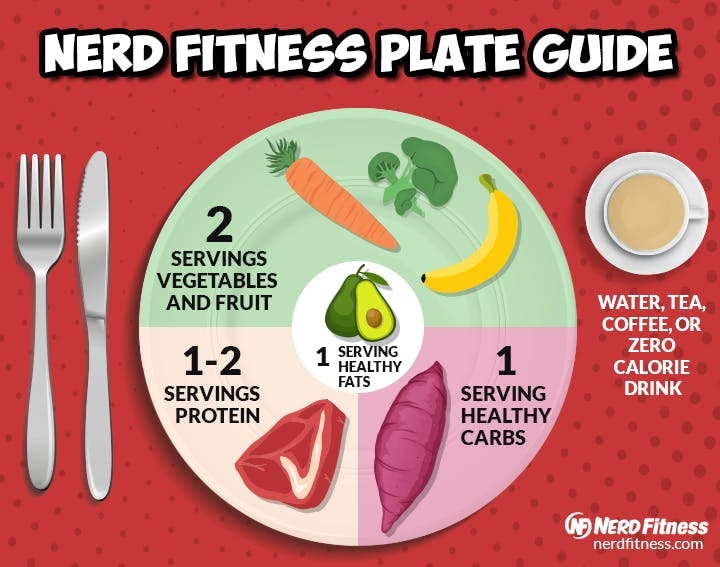
But you can check out our Guide to Healthy Eating for more info on that.
STEVE’S BIG PIECE OF ADVICE: GET STRONG.
Get really good at these basic movements and focus on getting stronger each week (I’ll cover how below).
If you get really strong at squats, deadlifts, pull-ups, and push-ups, you will build an incredible physique to be proud of.
Plus, building strength with these exercises will also help in other areas such as improving your performance in sports, decreasing your risk of chronic diseases (e.g., CVD) and premature mortality (an early death).[6]
*mic drop*
**picks up mic**
Then, once you get confident in those movements, feel free to add some variety.
Why?
If you do the same exact routine, three days a week, for months and months, you might get bored, and start slacking…
Or you might hit a workout plateau.[7]
So if you find yourself hitting a wall, feel free to stick with the above ‘formula,’ but change the ingredients:
- If you do bench presses on Monday, go with overhead presses on Wednesday and dips on Friday.
- Squats on Monday? Try lunges on Wednesday and front squats on Friday.
- Do deadlifts every Wednesday, but change up the sets and reps you pick!
If you hit a plateau or find yourself getting bored, pick a different exercise or adjust your sets and reps so you’ll stay challenged, and you’ll actually DO the workout!
Then, focus on getting stronger![8] (You are writing down your workouts, right?).
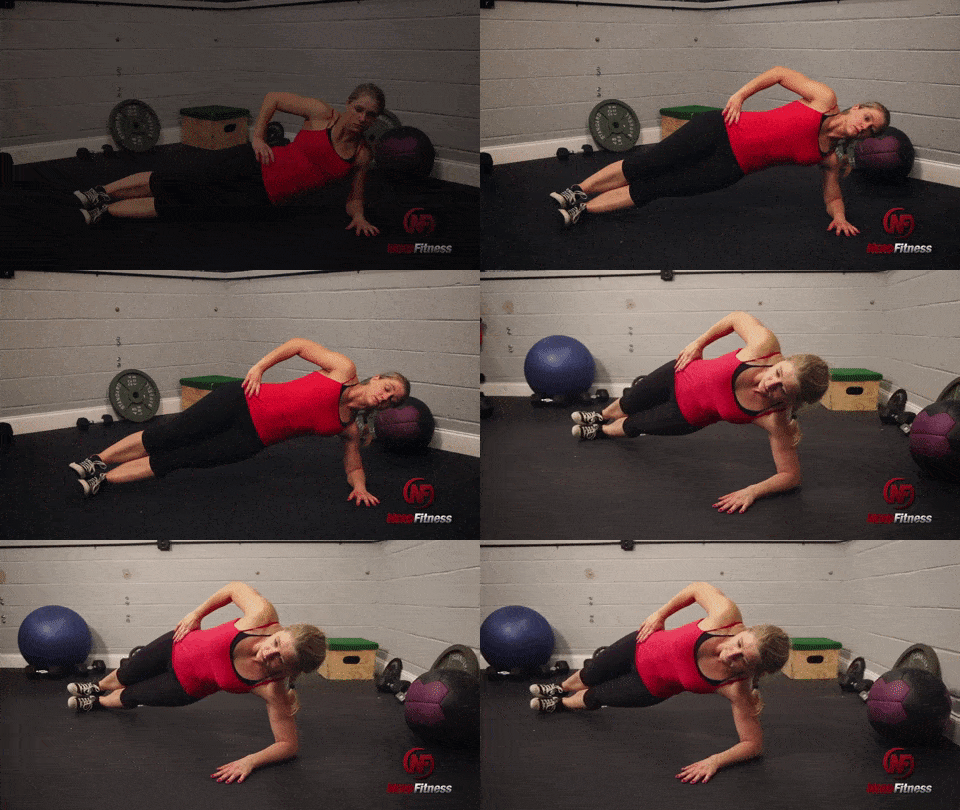
“But Steve, what about core exercises like sit-ups or planks? I don’t see those listed here.”
I’m so glad you asked! While it’s cool to add more specific core work to your program if you want to, squats, pull-ups, dips and deadlifts all do a great job of challenging your core to stay stable all on their own. If you do add in ab work, we recommend doing so at the end of your program so that you aren’t tiring out those muscles before doing your other big, compound lifts. Also, abs are revealed in the kitchen.
I know it’s really easy to overcomplicate this process as there’s an infinite number of exercises, sets, reps, and programs to choose from.
And yes, we have a solution for people that JUST want to be told what exactly to do: our uber-popular 1-on-1 coaching program pairs you with your own Nerd Fitness Coach who will get to know you, your goals, and your lifestyle, and develop a workout plan that’s specific to not only your body, but also to your schedule and life:
Step #3: How Many Sets And Reps Should I Do?

SIMPLE ANSWER: Not including a warm-up set or two, I recommend:
- 2 to 5 sets per exercise.
- 5 to 15 reps per set when starting out.[9]
LONGER ANSWER – watch this video:
As we cover in our “How Many Sets and Reps?” guide, a “set” is a series of repetitions that you complete without stopping.
For example, if you drop down and do 10 push-ups right now, you just did 1 SET of 10 REPETITIONS (or REPS) of push-ups.
Got it? Cool.
Some general rules on repetitions you can follow as you’re starting to build your workout plan:
- If you’re looking to burn fat while building muscle, keep your number of repetitions per set in the 8-15 range per set.
- If you can do more than 15 reps without much of a challenge, consider increasing the weight or the difficulty of the movement. This is true for things like lunges, bodyweight squats, push-ups, pull-ups, etc.
- If you want to focus more on building strength, keep your repetitions in the 5-10 range per set. As you get comfortable with the movements, you can move into lower rep ranges – but we find for beginners that starting with slightly higher reps gives you more time to practice doing the movement correctly.
There are some other generally accepted ‘rules’ about how to determine how many reps you should target per set, based on your goals:
- Reps in the 1-5 range build super dense muscle and strength (called myofibrillar hypertrophy).
- Reps in the 6-12 range build a somewhat equal amount of muscular strength and muscular size (this is called sarcoplasmic hypertrophy). [35]
- Reps in the 12+ range build muscular endurance.
However, don’t think of these as hard and fast rules. For example, a 2015 study [10] called into question the best rep strategy for building muscle or size:
It appears that high-intensity resistance (sets of 3-5 reps) training stimulates greater improvements in some measures of strength and hypertrophy in resistance-trained men during a short-term training period [compared to sets of 8-10 reps].
Other recent studies have found that people built a similar amount of muscle with anywhere from 5 to 30 repetitions, as long as they worked close to failure.[38]
What this means: Do not freak yourself out by worrying if you should do 3 sets or 4 sets of 8 reps or 10 reps.
Our advice would be to START with lighter weights and more reps as you learn the movement, and then decide if you want to stay at higher reps and lower weight or vice versa.
You do you, because either way will get you results!
The only thing you need to worry about: get stronger the next time you do that movement.
Either pick up a heavier weight, or do 1 more repetition than last time.

“JUST GIVE ME THE ANSWER!”
Keep your TOTAL (all exercises combined) workout number of sets for all exercises in the 10-20 set range, with 5-15 reps per set:
4 exercises total, each with 2 to 5 “work sets” is a good start. [36]
Remember, the most important part is to get started – you’ll learn how your body responds and you can adapt as you go.
What you DON’T need to do: multiple exercises for each body part with 10 sets.
This will result in significant fatigue during your workout increasing your risk of sustaining an injury. It can also result in overtraining, in which you will experience a decrease in performance and plateauing (will not see muscular improvements).[11]
So calm down you eager beaver.

A BIG CAVEAT: How you eat will determine if you get bigger or stronger. Nutrition is 80-90% of the equation. So pick a range that feels good, and then focus on nutrition.
And if you don’t want to figure any of this out and just want to be told exactly how what exercises, sets, and reps to do, our online coaches can take care of that for you.
Step #4: How Long Should I Wait Between Sets?

Keep it simple, you “smart, good-looking, funny, modest person” you.
Below is a basic formula for you to determine how long you should wait between sets, but this can be adjusted based on your level of health.
The goal is to wait the least amount of time you need, but still rest enough that you can perform all reps of the next set safely and properly!
Here’s why that’s important:[12]
Adequate rest in-between sets will allow your body to regenerate energy, so you can execute the next set of reps with good form and technique, therefore, decreasing your risk of injury.
I’ll provide some guidelines for how long to rest based on how heavy you’re lifting (not rules set in stone!):
- 1-3 Reps (lifting heavy for strength/power): Rest for 3 to 5 minutes between sets.
- 4-7 Reps (lifting for strength): Rest for 2 to 3 minutes between sets.
- 8-12 Reps (lifting for size/strength): Rest for 1 to 2 minutes between sets.
- 13 Reps+ (lifting for endurance): Rest long enough to recover to allow you to do the next long-ass set!
If you need more or less rest than the above recommendations, that’s fine. The key is being recovered enough that you can perform the next set at similar intensity and with great technique. Whatever it takes to get you there, do it![13]
Do the best you can, record how long it takes you to rest between sets. The amount of rest you need to take over time may vary.
Your body will adjust as you get stronger and healthier!
Step #5: How Much Weight Should I Lift?
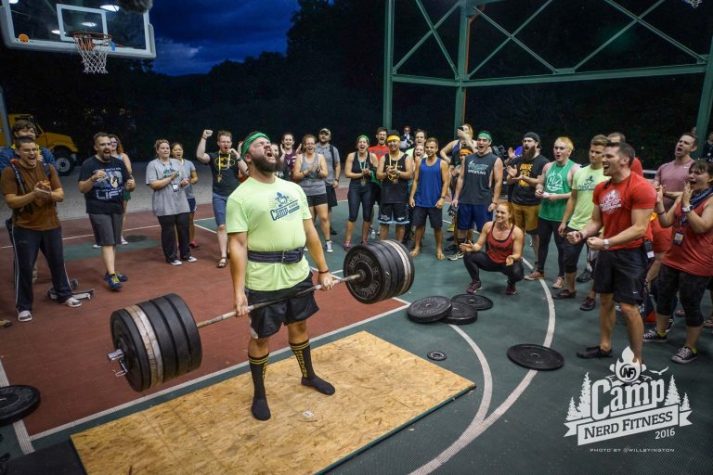
We have a FULL resource on how to determine your starting weight for lifting, but I’ll give you the gist here.
The simple-to-learn but tough-to-implement answer:
Lift enough so that you can get through the set, but not too much that you have NO fuel left in the tank at the end.
How do you determine how much that is?
Trial and error.
ALWAYS err on the side of “too light” versus “too heavy” when starting out.
It’s better to say “I bet I could have done more!” instead of “That was too much, and now I need to go to the hospital!”
Plus, when you start working out, you’re actually programming your neuromuscular systems to do the movement correctly.[14] You can’t rush this, so it’s best not to start off too heavy.[15]
When is it time to move up in resistance?
The NSCA has a 2-for-2 rule that recommends:[16]
If a person can do two reps (or more) over their set goal, then they should increase the load.
How much should you increase weight?
- For less trained people (i.e., beginners), it is recommended that for upper body exercises you increase the load by 2 – 5 pounds and by 5 – 10 pounds for lower body exercises.
- For more trained people (i.e., advanced), it is recommended that for upper body exercises you increase the load by 5 – 10 pounds or more and by 10 – 15 pounds or more for lower body exercises [37]
I will say, if you’re doing exercises with just your body weight, you need to make each exercise more difficult as you get in shape – once you get past 20 reps for a particular exercise and you’re not gassed, it’s time to mix things up.
That’s the key to “Progressive Overload,” as Coach Jim explains in this video:
Can you do 20 push-ups with no problem? It’s time to start mixing them up to be more challenging. Pick a variation from this article and make yourself work for it!
20 bodyweight squats too easy? Hold some weights high above your head as you do the next set. Eventually, you can scale up to do exercises like the pistol squat:
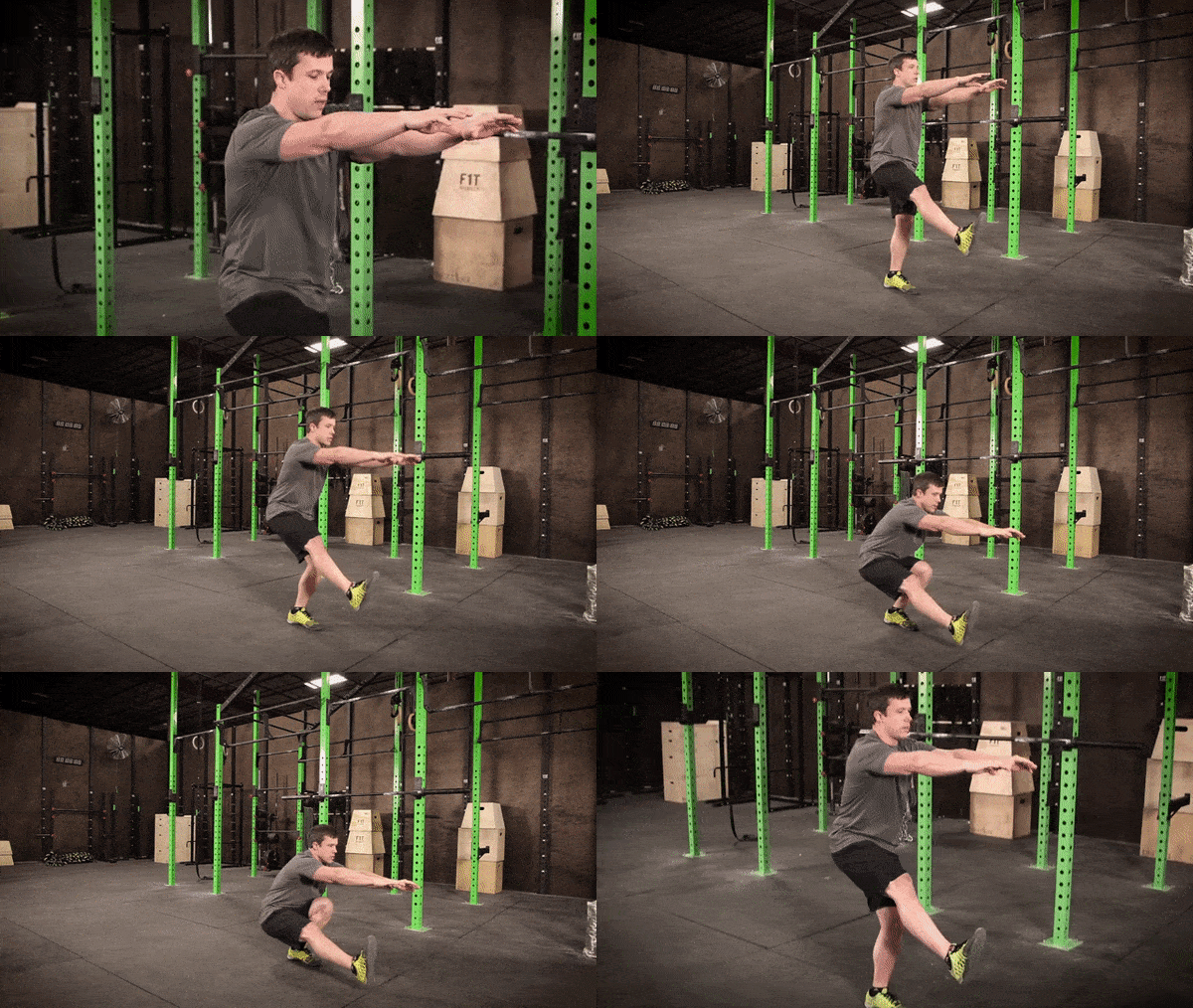
Looking for more bodyweight exercises? Check out the list of our favorite 42 bodyweight exercises you can do anywhere.
Step #6: How Long Should I Exercise For? How Long Should My Workout Be?

Easy answer: 45 minutes to an hour.
Longer answer: If you’re doing 10-20 sets of total exercise (2-5 sets for your 4 exercises), you should be able to get everything done within that 45-minute block.[17]
Now, factor in a five or ten-minute warm-up, and then some stretching afterward, and the workout can go a little bit longer.[18]
If you can go for over an hour and you’re not completely worn out, try increasing the intensity.
Less time, more intensity, better results.
What if you don’t have 45 minutes?
Do the best you can![19]
What’s that? You want to build some cardio into your weight training.
That’s where this next section comes in.
Step #7: How To Create Supersets And Circuit Training Workouts
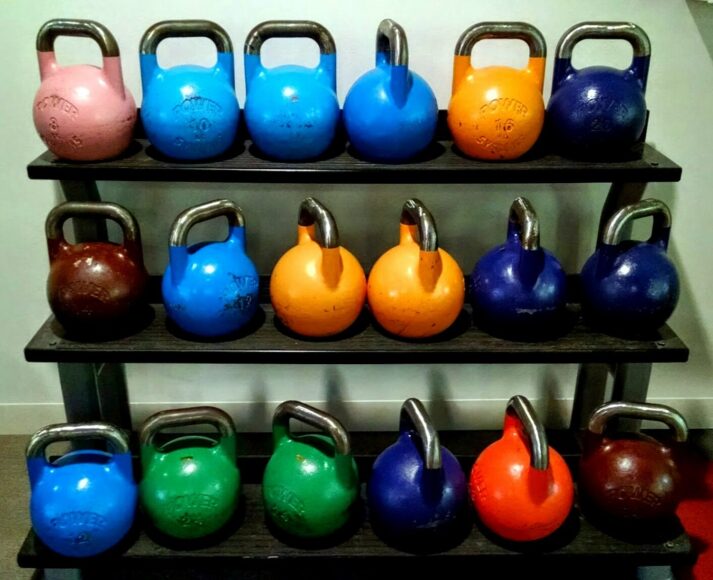
For those short on time, a circuit training workout is a highly efficient framework for training.
- You’re getting a cardiovascular workout by consistently moving from exercise to exercise.
- You’re exercising different muscles back to back, giving each muscle group a chance to recover, but in a condensed amount of time. Efficiency for the win!
- It also increases the amount of calories burned in your post-workout window. [20]
If you’re familiar with CrossFit, many of those workouts are built on circuit principles.
This is also the most effective way to make you involuntarily swear at inanimate objects because you’re so tired and beat up.
We’re going to cover TWO things here:
- Supersets (or alternating sets).
- Workout circuits.
#1) SUPERSETS
The NSCA defines it as:[21]
A superset is performing two exercises in a row on two different muscle groups.
For example, a superset could look like:
- Performing a set of squats
- Waiting one minute
- Performing a set of dumbbell presses
- Waiting one minute
- Then doing your next set of squats
And so on.
Because you’re exercising two completely different muscle groups, you can exercise one while the other is “resting.”
You’re now getting the same workout done in half the time.

Also, because you’re resting less, your body has to work harder so your heart is getting a workout too. Jackpot.
Let’s see how this would play out in a sample workout:
- Lunges alternating with incline dumbbell presses, four sets each, one minute between sets.
- Wait a few minutes to catch your breath and get set for your next two exercises.
- Straight leg deadlifts alternating with wide-grip pull-ups, four sets each, one minute between sets.
- Stretch, and get the hell out of there!
#2) CIRCUIT TRAINING
A circuit requires you to do one set for EVERY exercise, one after the other, without stopping.
Our very own Coach Lauren explains it here:
After you’ve done one set of each exercise in succession, you then repeat the process two, or three, or four more times.[22]
I’ve written about multiple bodyweight circuits here on the site:
We also have 15 FREE circuits you can follow in our big Circuit Training roundup guide!
Step #8: How Many Days Per Week Should I Train?
We get this question quite a bit, usually from overeager beavers who decide they are going to go from “sitting on the couch watching The Office on repeat” to “exercising 7 days per week.”
I would advise something different.
I mean you can still watch The Office…

…but you don’t need to be training 7 days a week!
We don’t want you burning out quickly and falling back to square one, a concern we mention in our guide “How Often Should I Work Out?“
Instead, focus on building proper habits and set a goal of 2-3 full-body workouts per week.[23]
For starters, your muscles don’t get built in the gym.
They actually get broken down in the gym, and then get rebuilt stronger while you’re resting…watching The Office.[24]
By giving your muscles 48 hours to recover between workouts, especially when training heavy, you’ll stay injury-free and get stronger.[25]
A Monday-Wednesday-Friday workout routine works well to ensure enough time to recover, especially when you are just getting started.
If you want to do Tuesday-Thursday-Saturday, or Sunday-Tuesday-Thursday, great.
And we get it. Life doesn’t always perfectly align with this every-other-day schedule. The most important thing is to do the work with the time you have.
Then, pay attention to how you are recovering in between workouts. Are you still sore and tired when you begin your next workout? Do you notice you are having to use lighter and lighter weights because you are too fatigued? It may be worth trying to give yourself more time in between workouts so you can recover!
“But Steve, what if I WANT to exercise on my off days?” That’s fine!
Just pick “exercise” that’s fun for you and that won’t exhaust your muscles. (Same questions as above.)[26][[26]]However, don’t forget that recovery is key to preventing injuries and allowing the body to rebuild itself after the stress of exercise. If you are looking to exercise on your off days we suggest that you cross-train. Cross-training involves engaging in a training routine or exercises that are different from what you normally would do. For example, if you always run for cardio, we would suggest that you change things up and go on the elliptical or bike. This allows you to stay active on your off days while also allowing the muscles that are always stressed from running to rest and recuperate. (Haff G, Triplett NT. (2016). Essentials of strength training and conditioning. Fourth edition. Champaign, IL: Human Kinetics).[[25]]
Also, here’s a lifehack: Program your workouts INTO your Google calendar (or Outlook).
You’re much more likely to do a workout that has been planned for in your work week!
Alternatively, you can hire a coach to program your workouts for you, so every day you know exactly what you need to do!
Step #9: Keep Track Of Everything!

Last but not least, keep a workout journal!
As they say, that which gets measured gets improved.
You should be getting stronger, faster, or more fit with each day of exercise.
Around these parts, we say “Level up your life, every single day.”
So track and measure your progress!
Things to track and record for your workout:
- Can lift more weight?
- Can you lift the same amount of weight more times than before?
- Can finish the same routine faster than before?
If you see your numbers improving (more weight, faster times, etc.), then you’re getting stronger and gaining more lean muscle mass![27]
Woot.
Personally, I track all of my workouts in Evernote.
I note the sets, reps, weight, and date.
I have over 1,000 workouts in my folder, which makes it super simple to see what I did last month, or even last year, and to make sure I’m improving!
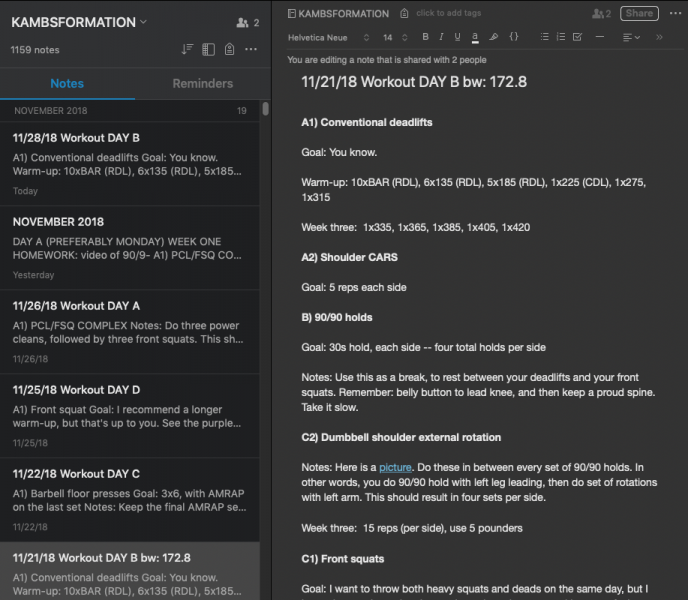
You can use an actual notebook, a bullet journal, an Excel spreadsheet, a workout app, or a Word document.
Don’t overcomplicate it:
- Write down the date and your sets, reps, and weight for each exercise.
- Compare yourself to your previous workout with those exercises.
- Focus on getting stronger (more reps, heavier weight, an additional set, etc.)
- Repeat.
Do this with a workout you’ve built, and you WILL get results. I promise.[28]
For more here, check out:
#1) The guide How to Check Your Progress
#2) Our advice on How to Set a New Personal Record
#3) The video How to Journal to Reach Your Goals
Steve, Just Build A Workout For Me!
If you’re looking for sample workouts to build off of, take one of the 6 Workouts in our “Gym 101” guide.
Or if you want a plan to follow, pick one of our 15 Circuit Training Routines!
If you want to build from scratch, great! Let’s break it down into easy chunks with this recap:
- Warm-up – 5-10 minutes on a bike, rowing machine, jumping jacks, running up and down your stairs, etc. Get the blood flowing and your muscles warm.[29]
- Pick one exercise for each big muscle group – quads, butt and hamstrings, push, and pull.[30]
- Do 2-5 sets for each exercise. (Start with lower sets to begin with.)
- Do 5-15 reps per set for each exercise. (If you aren’t sure where to start, 10 reps is a nice middle ground.)
- Rest and recovery between sets for each exercise. Keep it simple. 1-2 minutes and adjust from there.[31]
- Increase your efficiency and work your heart by doing supersets or circuits. This results in a higher EPOC meaning greater caloric expenditure and weight loss!
- Keep your workout to under an hour.[32]
- Stretch AFTER your workout.[33]
- Write everything down![34]
- Give yourself permission to mess up, learn a little, and keep improving as you train more regularly!
More often than not, when I email people back and tell them how to build their own workout, they generally respond with:
“Steve, can’t you just TELL me what to do? I’m afraid of building a crappy workout.”
Why we built TWO options for people like that:
1) If you are somebody who wants to know they are following a program that is tailor-made for their life, situation, and goals, check out our Online Coaching Program.
You’ll work with our certified NF instructors who will get to know you better than you know yourself and program your workouts and nutrition for you.
2) Join the Rebellion (our free community) and I’ll send you free guides, workouts, and worksheets that you can read at your leisure.
We need good people like you!
I certainly encourage you to try and build your own workout routine.
It can really help you develop a sense of excitement and pride when you start to get in shape based on your workout!
-Steve
PS: Check out the rest of our beginner content. I promise, it kicks ass 🙂
- Beginner Dumbbell Workout
- Strength Training 101: How to Get Strong
- How to Lose Weight Without Dieting: 5 Rules.
- Beginner Strength Workouts
- 42 Bodyweight Exercises you can do anywhere
- How to Find a Good Trainer
- Beginner Gym Workouts (6 Levels)
###
Photo Sources: mdwombat, joshtasman: Question Finger 6, black.zack00: Yeaaaah…. Surprise ladies!!, Sterling College: Sterling Gym, ako_law: Stopwatch, black.zack00: Boxing a gentleman’s sport, Photographing Travis: Kettlebells. ahockley: DDC Stuff Sheath and EEEK Field Notes, Ivan Kruk © 123RF.com