Download Our Free Tools
Workouts, nutrition guidance, and habit-building. Never wonder where you should put your limited time, energy, and effort.
Get our FREE Starter Kit with dozens of resources today!


So you’ve decided it’s time to start running?
Perfect! You’ve arrived at the right place.
We’ve helped thousands of people run injury-free and train for their first 5k or marathon, and we’ve put together everything you need to know below too!
Here’s what we’ll cover in our guide to running:
If you’re interested in starting a proper running practice (which you are, ’cause you’re here), you may want to try our new app! It contains a fun adventure that will take you from sitting on your couch to running a full 5k – with plenty of benchmarks in between for you to find your groove. No guesswork needed, just tie your shows and follow along with the app.
You can sign-up for a free trial right here:


Alright, let’s do this thing.

Before you even THINK about strapping on a new pair of Nike shoes and going for a run around your neighborhood, we need to get a few things straight:
Your body needs to have a base level of fitness before running becomes a viable option.
Here’s why running too early can be harmful:
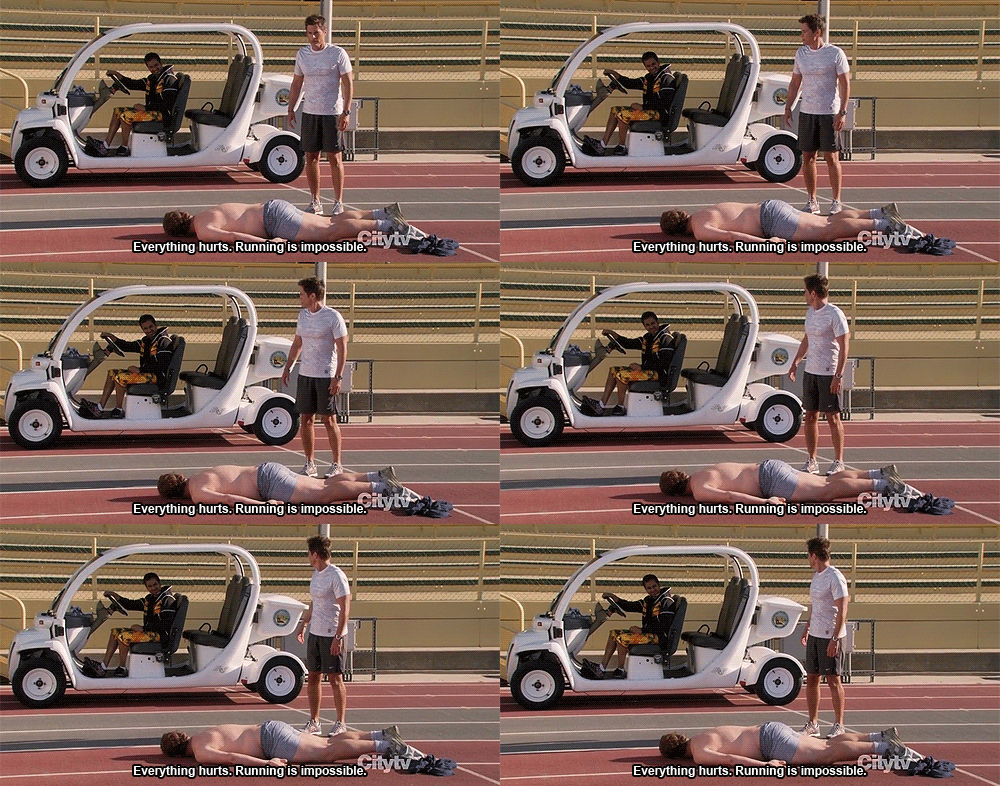
Your initial conditioning for running will center on three points:
#1) Focus on your nutrition. This will allow you to lose weight which will reduce the impact of running on your tendons and joints.
#2) Strength Train. We have coaching clients who repeatedly injured themselves running until they started a strength training practice. After lifting some weights their ligaments grew strong and allowed them to run injury-free.
If you have no idea how to start a strength training practice, give our Beginner Bodyweight Workout a try:
Many a Rebel have used the workout to springboard their strength training journey.
#3) Finally let’s add in some activity that’s low-impact:
Check out 40 Ways to Exercise Without Realizing It for fun activities to keep your body moving!
To Recap: strength train, reduce your calorie consumption, and begin a low impact activity – build up your foundation to prep your body for running. The less weight your body has to carry around, the less work your legs and joints have to do, the less likely you’ll be to damage your joints and/or injure yourself.
Now that you have a solid foundation and you’re ready to start running, you can move on to the next step.
If you don’t know where to start on changing your diet, or have had trouble with it in the past, I got you.
We created the Nerd Fitness Diet cheat sheet to help you get going. It’s a level-up system designed for you to adopt new healthy habits, that will stick, by slowly progressing you from a newbie to an expert.
If you’ve had trouble previously, perhaps it’s because you changed too much too quickly.
Want to check it out? You can grab it for free when you join the Rebellion in the box below!

Before you take your first stride as a runner, you need to be properly warmed up.
When most people think of warming up, they probably think of standing there and doing some static stretching for 10 minutes…you know, to make sure you don’t get injured!
Wrong! Fail! Stretching before running can actually increase your risk of injury.[3]
Instead, try a dynamic warm-up – get your body properly warmed up and prepared for the rigors of running.
Let’s set you up with a few different options:
#1) A running-specific warm-up video from my friend Jason over at Strength Running, who you’ll see in more videos below:
#2) Coach Staci providing you with a quick sequence to try out:
#3) You can also check out our post “How to Warm Up Properly” for more moves and tips.
Just like with strength training, if you don’t have time to warm up, you don’t have time to run.
Cut the run short if you need to, but not the warm-up!

If you don’t learn how to run correctly, you’re doomed to develop an overuse injury and that’s going to negate the whole reason you started running in the first place!
This is why your running form is so damn crucial: when you run, you’re putting hundreds of pounds of pressure on your joints and ligaments with each bounding step down the road. This is then repeated thousands of times over the course of training and a race.
No wonder nearly every runner has tons of stories of injuries they’ve had to deal with. It can be a brutal activity that can wreak havoc even with good running mechanics.
With poor running mechanics, the results are compounded.
You know, painful stuff…

We don’t want that.
Make sure you follow the below five steps:
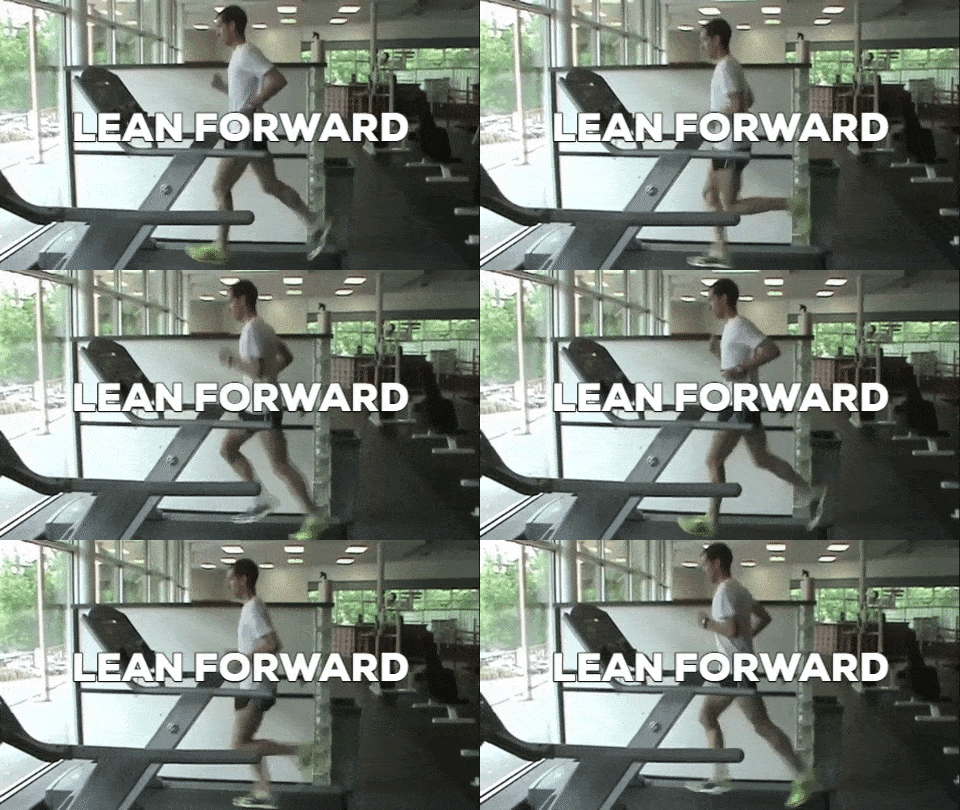
Lean from your ankles, and keep a straight line from your ankle, through your butt, and up to your head. If you’re standing still with this slight forward lean, you should feel like you’re about to fall forward.
Just don’t actually fall forward.

When you start running, gravity will help keep you progressing forward. A proper lean from the ankles keeps your body in alignment and loads your muscles properly and efficiently.
Cadence is your stride rate, or the number of steps you take per minute. It will probably seem weird at first, but you’re putting less stress on your legs with shorter foot strikes.
Your cadence should be at least 170-190 steps per minute when you’re running at an easy, conversational pace. It will probably increase once you start running faster—that’s normal.
“Steve, what the hell do I do with “170-190 steps per minute?”
Great question. Go to Spotify and look for 170-190BPM playlists, like these which I found here:
Not on Spotify? Cool. (But like, why?) To get a cadence, try running to Outkast’s “Hey Ya” and time your strides to match the beat. That’s the cadence you’re looking for:
Research has shown[4] that increasing your cadence and taking more steps (around 180 per minute) provides many of the same benefits of barefoot running:
You’ll feel like you’re taking way more steps than normal – that means you probably had poor form before and now you’re fixing it!
If your legs get to the point where they’re going this fast, let me know:
When your foot comes down and makes contact with the ground, it should be underneath your body, not in front of it.
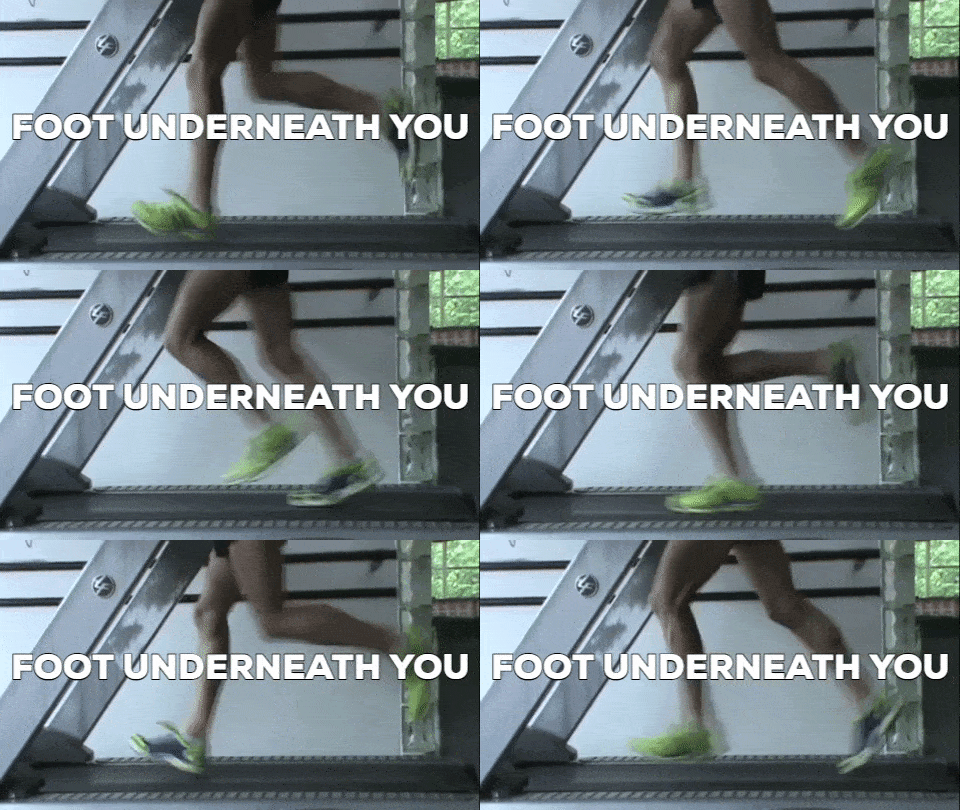
Combined with a quick cadence and a slight forward lean from your ankles, you’ll be distributing impact shock evenly—and efficiently.
This aspect of running form is often skipped over by beginning runners.
Instead of focusing on where the foot is landing in relation to the rest of the body, they focus too much on running on their forefoot. If you don’t land in the right place first, a midfoot or forefoot strike will only do more damage.
As you’re running, a good mental cue is to think that you’re just “putting your foot down” in a straight line underneath your body.
There’s no reaching or stretching your leg out in front of you.
Practicing this mental cue will have your leg touching down almost exactly underneath your center of mass, distributing your weight evenly and safely.
While not as important as landing underneath your center of mass, becoming a mid-foot striker has a host of benefits.
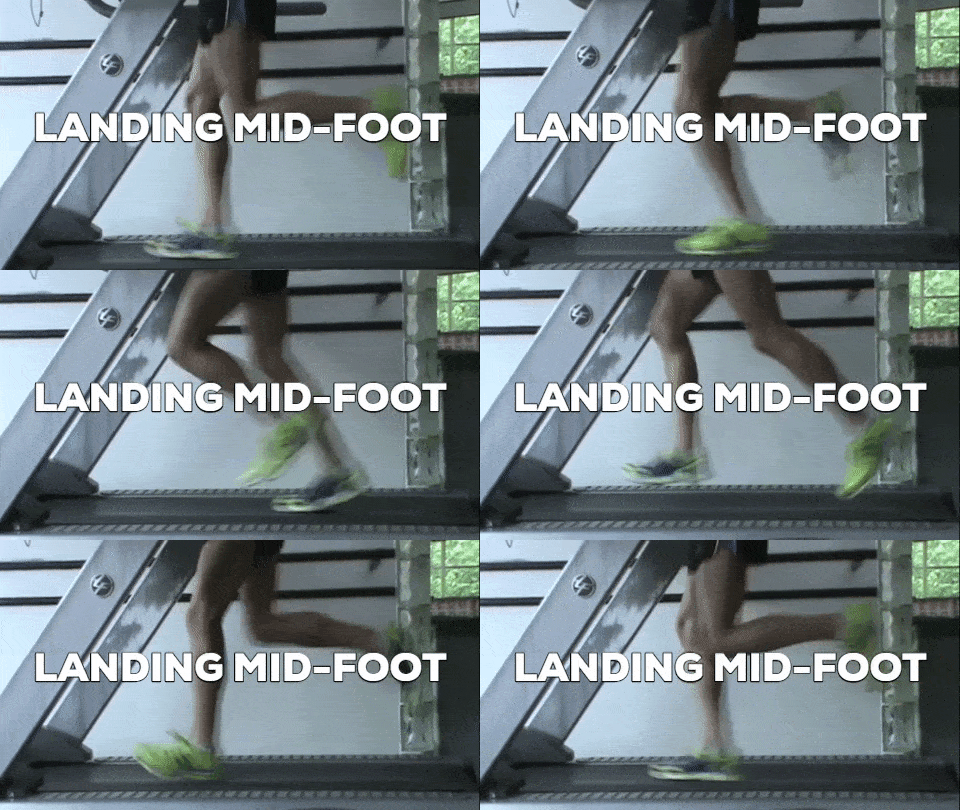
It can help you avoid a lot of injuries by absorbing impact shock and preventing a severe heel striking running stride.
Heel-striking can’t be entirely blamed for injuries and labeled “bad.”
Even elite athletes heel strike when they run races! It’s not entirely bad— especially if you’re putting weight down on your foot just after you heel strike, instead of directly on the heel.[5]
What you should focus on is having a higher cadence, landing underneath your body, and not aggressively heel striking.
Try to land with your foot flat on the ground, instead of with your toes angled upwards.[6]
Nobody wants to look at you running if you’re flailing your arms wildly all over the place like Elaine dancing from Seinfeld.

An ideal arm swing has your arm bent at about 90 degrees and a front-to-back swing (not side-to-side).
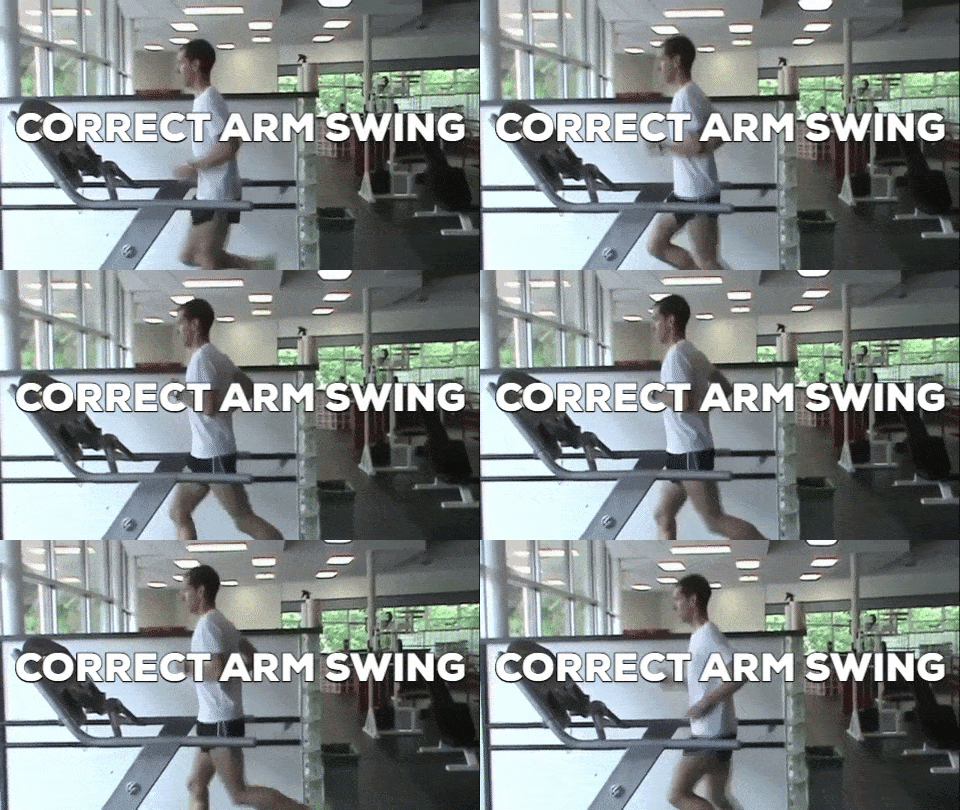
Imagine a pretend line that goes down your mid-line or center of your body. When you run, your hands should not cross over this imaginary line.
Cup your hands loosely together (no clenched fists!) and if you want to use your arms for momentum, pump your elbows, not your hands.
Once you incorporate these changes into your running form, you’ll feel a lot more comfortable and your injury risk is going to plummet.
For extra credit, learn to run softly and quietly.
Foot stomping isn’t allowed and gets increasingly more difficult as you approach 180 steps per minute.
A few other things you want to keep in mind:
Both are easy cues to keep an athletic posture and good running form.
Go back through and read this section a few more times. We know it’s a LOT to think about while running, but it is incredibly important.
If you get a chance, have somebody film you running, and then watch your tape back to see how you’re doing.
I should note that we provide form checks to our coaching clients. Through our awesome app, you can record a video of your running form or exercise technique and send it right to your coach! That way you can know your running and training safely and correctly!

Starting a running practice can be daunting.
That’s why I actually recommend walking first. I mentioned earlier that walking can help build the foundation of a great running practice.
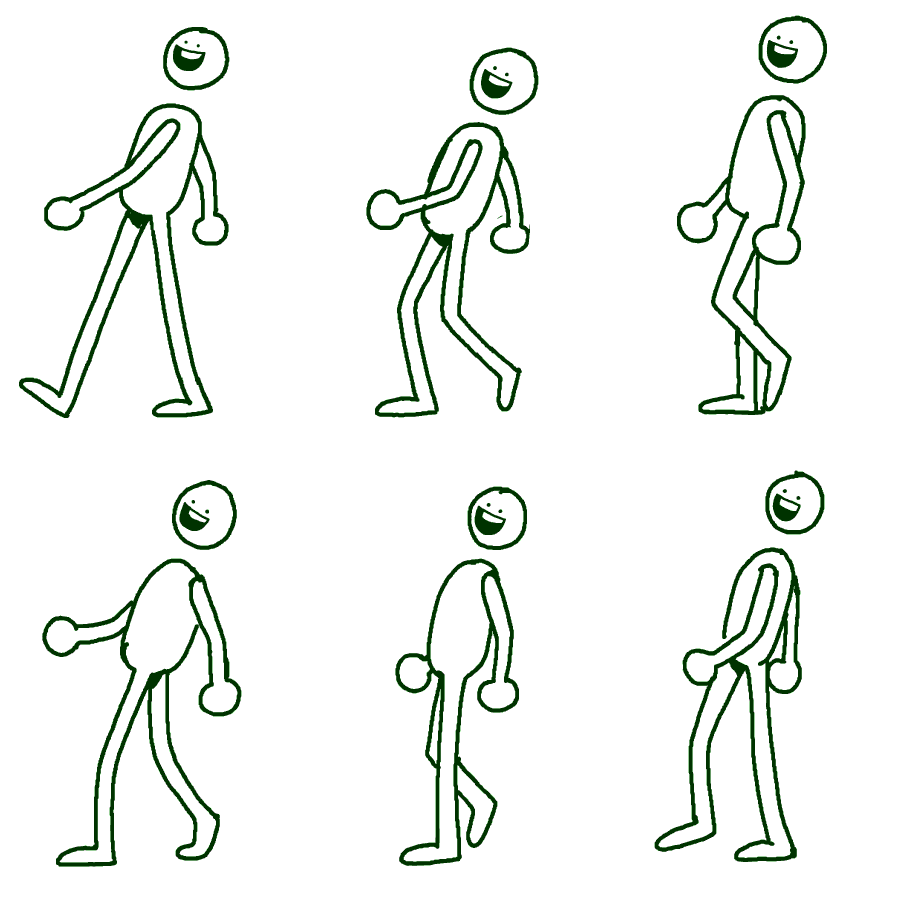
Once you’re comfortable moving a little bit, an ideal way to actually start running is to alternate between a brisk walk and a jog. This can help you build up some strength so you can run at a more constant pace.
Alright, we’ve talked about technique, plus some tips for getting up and running.[8]
However, I know you’re gonna ask, so let’s talk about what kicks you should rock.
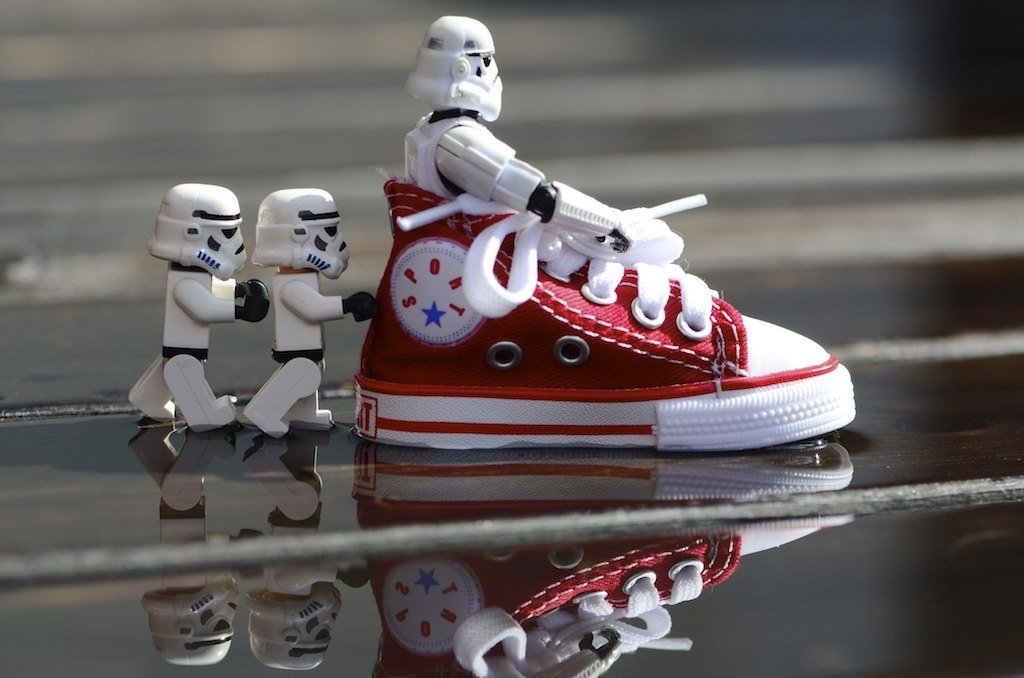
There are four components to look for in any shoe.
If the shoe doesn’t meet these four criteria, then your foot is going to be compromised.
Let’s look at each in a bit more detail:
1. Minimal heel-toe height difference (aka “drop”). When your shoe raises your heel higher than your forefoot (aka “heel lift”), your ankle and lower leg are being positioned in a slightly shortened position for the duration that you’re wearing the shoes.
When your leg muscles are thrown into a slightly unnatural position, it means the mobility of your ankle will suffer… and this will limit all sorts of things including your running gait.[9]
This doesn’t just mean high heels either…although running in heels is ridiculous.
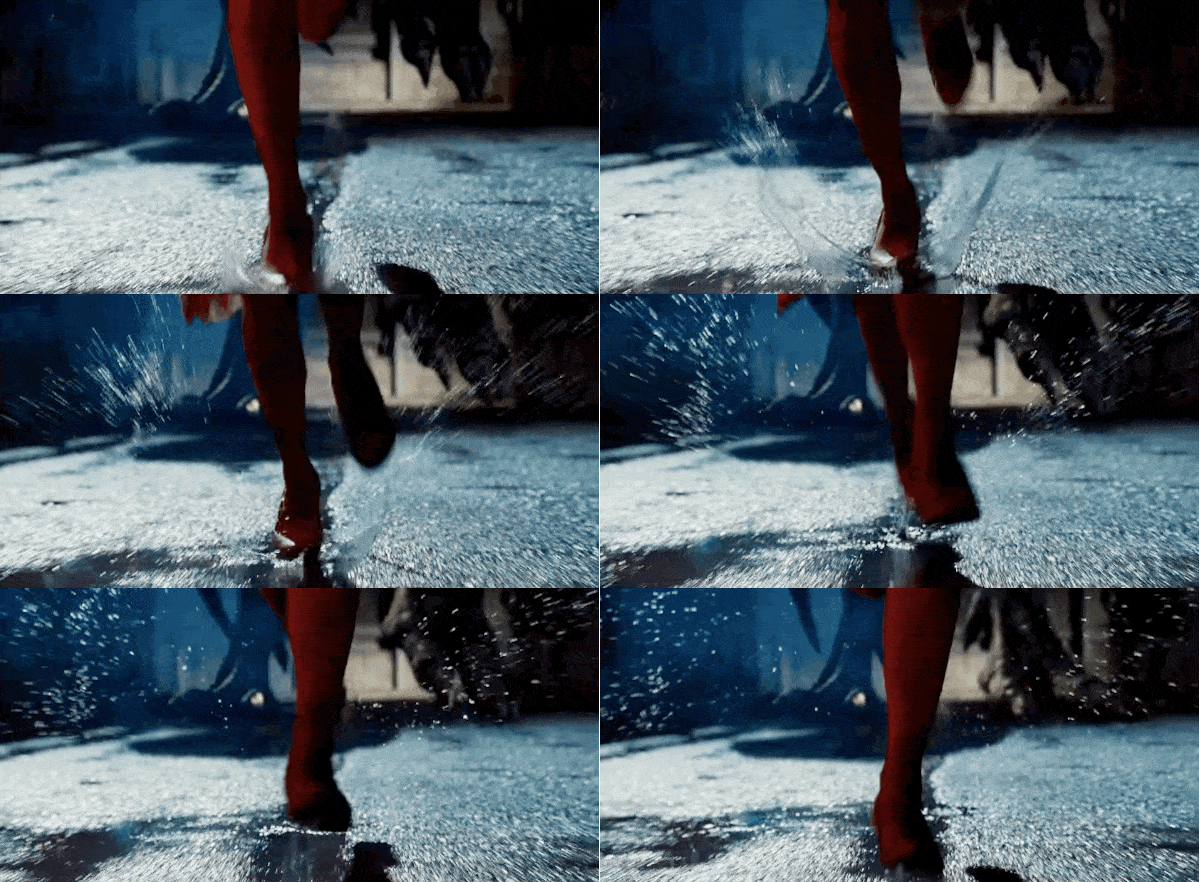
This includes most regular shoes that have a bulky heel and lower toe. In many shoes, you’ll see this difference between heel and forefoot referred to as a “drop,” so “zero-drop” shoes are shoes where heel and forefoot are at the same height.
Check to see what your current shoes weigh, and each time you buy a new pair of shoes, work your way towards more and more minimal shoes – down to 10 oz or so (which would qualify them as “minimalist shoe” in our book).
Our advice would be to not go too far below 7-8 ounces.
The big question: “Should I be doing barefoot running?” – Occasionally, and with proper form, SURE. But don’t just put on a pair of Vibram 5 Finger toe shoes and go run a 5k on concrete tomorrow. That’s a recipe for disaster.
2. A wide toe box that allows your foot to spread as it lands on the ground with each step. With each step you take, your foot actually spreads wider upon landing. This is impossible for your foot to do when it’s in a shoe that is too narrow.
If the toe box is not at least as wide as your foot when you’re standing on your foot, while it’s bearing your weight, that’s a problem for your foot. Know that as your foot becomes more ‘natural’ it’s possible it will it may widen further, as the muscles and bones reposition themselves.
Feet crammed into a shoe is like putting a leash on Sonic the Hedgehog: they want to be free!
3. A pliable bottom that allows your toes to bend fully as you step. Your great toe is meant to flex to ninety degrees as you move through the gait cycle. See below:
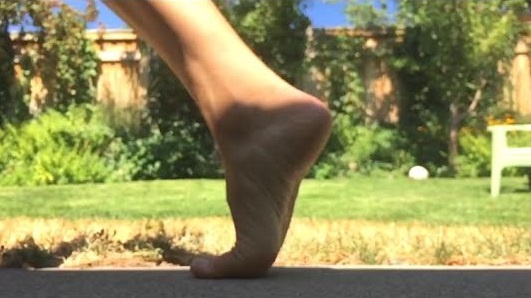
If your shoe does not allow this due to a hard sole, your feet won’t be able to move as well, and the soft tissues of your foot will get weaker from not being used fully.
PLUS, when you aren’t flexing your big toe regularly, your body will start to lose the ability to use that joint fully. This can lead to all sorts of problems. Doh!
4. It’s strapped to your foot. If the shoe isn’t strapped around your ankle, your toes are going to grab at the shoe to keep it on with every step you take. This makes some of your foot bones push down and some of your foot bones lift up.
That shift means you change the amount of forces on each bone. Over time, this can lead to stress fractures and tissue injuries.
Check out the video below from movement specialist Kelly Starrett:
For each point above, this isn’t an “all or nothing” scenario. Similar to your nutrition, do the best you can when you can, and work your way into running with a minimalist shoe.
If you want to learn more about proper footwear, make sure you check out “A Nerd’s Guide to Healthy Feet,” written by Kate Galliett of FitForRealLife.com.
Lastly, if you want to learn more about the benefits of ditching your shoes altogether, you can check out our article “Is Barefoot Running Really Better for You?”

For the most part, it doesn’t really matter what surface you run on if your form is good and you’re resting enough to recover between your workouts.
But each surface does affect your body in different ways, so you should know the pros and cons of each one.

People have been running on the roads since they were first paved over 100 years ago. Most people run exclusively on the roads since they’re the most common surface that’s available for running.
There’s nothing inherently wrong with road running. It’s stable and has a relatively predictable surface so you probably won’t twist an ankle.[10]
As long as you’re avoiding cars and running AGAINST the flow of traffic (so you can see approaching cars) you’ll be safe.
The danger of roads comes when you run on the same side of the road all the time.
The problem lies with the road’s slope.
For drainage reasons, every road has a slight slope toward the curb. If you’re always running against the flow of traffic your left leg is going to be slightly lower than your right. The solution is to switch sides of the road, but only if traffic conditions allow.
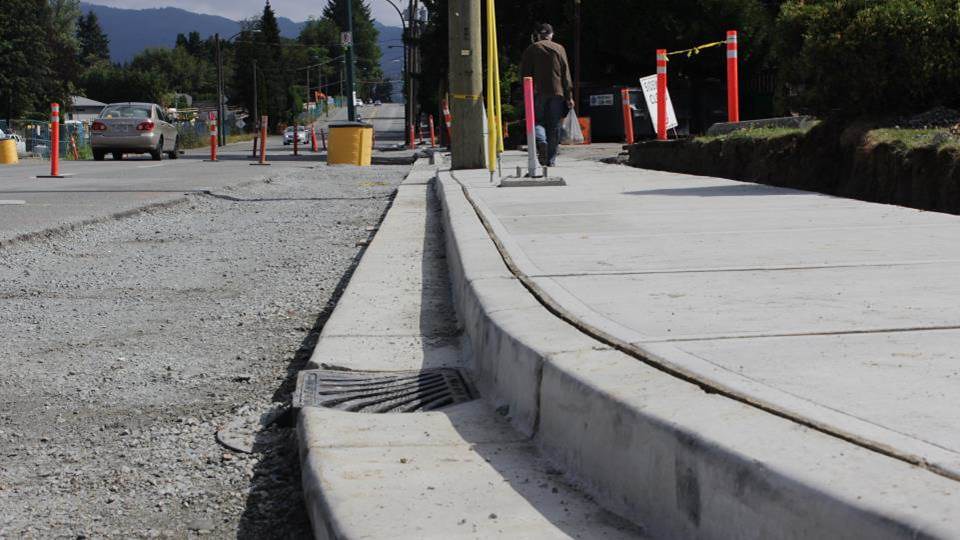
Most sidewalks are made of concrete, not asphalt, and are actually a lot harder than the road itself. This isn’t necessarily a drawback, but you will be experiencing more impact forces on concrete than the road. If you do a lot of running on the sidewalk, make sure your form is as good as it can be![11]

Unless the grass is very hard-packed and smooth, I don’t recommend running on it for a long period of time. Grass is very soft so you won’t be sending jarring impact forces up through your legs like concrete, but the uneven surface is going to break up your stride and you could tweak your ankle or a muscle in your foot.
Some grass is great to run on, though. The harder and smoother it is, the better it is for running…like a golf course.[12]


Smooth dirt or crushed gravel (very fine— not big chunks of gravel you find in some driveways!) are some of the best running surfaces. Like the hard grass surface of a golf course, dirt and crushed gravel trails offer the same impact-dissipating qualities while still retaining firm footing. It’s the best of both worlds.
You’ll find these types of trails at larger parks with walking paths or in national/state parks with well-maintained trails.

Think sharp turns, rocks, roots, stream crossings, hills, and anything else Mother Nature can throw at you. In a word: FUN.
These trails are usually narrow and filled with obstacles. The hills, direction changes, and irregular surfaces will force you to use a lot of stabilizing muscles in your lower legs. This could be good for building strength.

Found at most local high schools and colleges, a 400-meter outdoor track provides a great training place for workouts.[13] But that’s what they’re for: workouts. Not every day running!
The surface is forgiving like hard-packed dirt or a very firm golf course. But while the surface is great, the turns are what makes a track not ideal for everyday training. By doing all of your running on a track, you’re constantly turning left and setting yourself up for muscle imbalances.
You’re better off running somewhere where the turns are varied so you expose yourself to different stresses instead of the same thing over and over again. That’s how overuse injuries happen. Tracks are for faster workouts, not easy distance runs.
WHAT SURFACE SHOULD YOU RUN ON?
Your training would ideally be a combination of all of the surfaces that are available to you. Exposing your body to as much variety as possible will give you a better chance at preventing injury since you’re not doing the same thing over and over again.
The few types of running surfaces that lend themselves to more frequent training are:
The footing is sure and the surface isn’t too soft or firm.
Limit your running on concrete and technical trails because of the injury risk. Most sidewalks are made from concrete and are incredibly hard. Throw a tennis ball on one to see for yourself—it’ll shoot right up into the air because of the returned energy. Those same forces are being returned into your legs when you run on them.
Technical trails present a different challenge: roots, streams, rocks, and uneven terrain.

Run sparingly!
A good strategy to use when deciding where to run is to figure out how your body feels.
If you’re sore or have a tender muscle, run on a softer surface. A dirt trail or well-manicured field will help you recover better than the roads.
But if you’re doing a workout, you want to avoid technical trails or concrete sidewalks. Pick the track, a clear dirt trail, or a road without a severe camber.

When people tell me they’re going to start a running routine, I always ask: “Great! Do you enjoy running?”
If the answer is “No, not really” then I’d say, “Interesting. Then….why running?”

Most people think running = weight loss. If you’re brand new to health and fitness, and you’re trying to lose weight, you’re most likely overwhelmed at what you should start with and how you should train.
So let’s answer the question “will running help me lose weight?”
Maybe!
Running will help you lose weight if you do two things:
Running won’t help you lose weight if you do two things:
As sexy as it is to think that just going for a run will help you lose weight, the data doesn’t back it up. Time Magazine rightly pointed this out years ago, and got yelled at for telling the truth, that exercise alone won’t make you lose weight.[2]
I believe that to be especially true when exercise is only steady-speed cardio.
In fact, many people gain weight after starting an exercise routine and get completely demoralized.
What gives?
As we say here at Nerd Fitness, you can’t outrun your fork, and nutrition is 90% of the battle.
If you go for a mile run and then stuff your face with extra calories “because you earned it,” you’re going to gain weight.
It’s not because you have a slow metabolism, I promise. It’s because you’re consuming too many calories.
This is a common mistake: not fixing your nutrition if you’re running for weight loss!
If this were a movie, nutrition would be Tom Cruise in Mission: Impossible and exercise is that funny sidekick who helps Tom. Let’s be real here, Tom is doing all of the heavy lifting to make that movie what it is.

While exercise is important for health, it doesn’t have to be running. It can come from activities you DO enjoy:
Whatever…

Now, if you answer the question “do you even like running?” with something like:
…then we can continue the conversation!
The perfect place to continue the conversation?
Our new app! We have an adventure that takes all the information in this guide and provides it with actionable steps (hehe) for you to get up and running. No more “am I doing it right?” just follow the app and know you’re training correctly.
You can sign-up for a free trial right here:

Once you get comfortable running around your neighborhood or park, you can start thinking about taking it to the next level.
Have you ever thought about running a race? They can be a lot of fun!
Here’s a clip from a race years ago where I dressed up like a Caveman with 20 of my friends and raised thousands of dollars for kids with cancer to go to summer camp!
If you want to learn how to get started, make sure you check out our article “Couch to 5K.” We cover the popular program and give our take on running your first race.
Just make sure you don’t make these 5k mistakes:
If you want even more guidance on long-distance running, I’ll point you again to my buddy Jason Fitzgerald’s wonderful site Strength Running. I reach out to Jason whenever I need advice on proper running (including the tips found in this post).
You can also check out this interview I did with Jason, where we discuss running, proper diet, and Star Wars.
There’s some overlap…

Alright, I think you’re ready to lace up and head out the door!
Want a little more help getting going? A slight nudge to get you out of the door?
Here are my top recommendations for next steps:
#1) We have a bunch of NF Coaching clients that love to get outside and run! If you want step-by-step guidance on how to lose weight, eat better, and learn to run properly, check out our killer 1-on-1 coaching program:
#2) If you need a trigger to “get up and run” check out NF Journey. Our fun habit-building app helps you exercise more frequently, eat healthier, and level up your life (literally).
Try your free trial right here:
#3) Join the Rebellion! We need good people like you in our community, the Nerd Fitness Rebellion.
Sign up in the box below to enlist and get the Nerd Fitness Starter Kit, including the 15 fitness mistakes you don’t want to make and our guide to the most effective diet and why it works
Now, your turn!
Are you an avid runner?
Do you have any tips for Rebels just lacing up?
Or are you like me, and only run when something is chasing you?
Let us know in the comments!
-Steve
PS: Don’t forget to check out the rest of our running content!
###
Photo Source: Man on Dirt Road, Asphalt, Sidewalk, Grass Field, Gravel Trail, Hiking Trail, Track, Flash, Delivery, Decathlon, Fireman, Sonic, My Slowest Friend, Kristina Alexanderson: Lego in Shoe, Runner
GIF Source: Liam “Why”, Homer running, Mission Impossible, Parks and Rec, Homer Hospital, Eric Hospital, Elaine, Dog Golf Course, Trail Running, Walking Man.
Workouts, nutrition guidance, and habit-building. Never wonder where you should put your limited time, energy, and effort.
Get our FREE Starter Kit with dozens of resources today!